
Modified food starch
Modified food starch is starch from corn, potato, tapioca, wheat, or other plants that is treated to help foods thicken, stay mixed, or hold water. The name covers several ingredients with different properties. Wheat protein can remain in some wheat-derived forms.
Also known as
food starch-modified · food starch, modified · starch, food, modified · modified food starch · modified starch · modified corn starch · modified maize starch · modified potato starch · modified tapioca starch · modified wheat starch · oxidized starch · oxidised starch · monostarch phosphate · distarch phosphate · phosphated distarch phosphate · acetylated distarch phosphate · starch acetate · acetylated starch · acetylated distarch adipate · hydroxypropyl starch · hydroxypropyl distarch phosphate · starch sodium octenyl succinate · acetylated oxidized starch · acetylated oxidised starch · starch aluminum octenyl succinate · starch aluminium octenyl succinate
Why PRūF tracks it
Concern centers on weak infant evidence for one modified starch, possible exposure above studied amounts, and remaining wheat protein in some forms, while an additive-mixture diabetes association does not establish that modified starch itself causes disease.
Read the research
Modified food starch describes a family, so the plant source and treatment matter. Some forms resist digestion more than others, and findings about one preparation cannot describe them all. European reviewers found no general safety concern at reported food uses, drawing partly on comparisons between related starches; their assessment did not establish identical evidence for every member. Remaining uncertainty is more specific.
For starch sodium octenyl succinate, called E1450, infant feeding studies had weaknesses, and some estimated intakes exceeded the amounts studied without clear adverse effects. European rules now tighten purity standards and require lower amounts in certain infant and young-child medical foods from February 2028. A French study linked an additive mixture containing modified starches with diabetes, but could not isolate their contribution or prove causation. An earlier analysis found no cardiovascular association for the starch group, while a particular modified starch reduced weight gain in mice.
These findings do not establish either disease prevention or harm from ordinary food portions. Wheat-derived forms need attention when allergenic wheat protein remains.
Research reviewed on September 5, 2026 · 12 sources
Matches
1–12 of 1242 matches
 (4) Double Blueberry PancakesIHOP · Updated September 23, 2026
 (4) Mexican Tres Leches PancakesIHOP · Updated September 23, 2026
 (4) New York Cheesecake PancakesIHOP · Updated September 23, 2026
 (4) Oreo Cheesecake PancakesIHOP · Updated September 23, 2026
 (4) Strawberry Banana PancakesIHOP · Updated September 23, 2026
 #13 Jimmy Cubano®Jimmy John's · Updated September 23, 2026
 #13 Jimmy Cubano® (Toasted)Jimmy John's · Updated September 23, 2026
 #26 Bacon Ranch Chicken Cheese Steak (Bowl)Jersey Mike's · Updated September 23, 2026
 #26 Bacon Ranch Chicken Cheese Steak (Giant)Jersey Mike's · Updated September 23, 2026
 #26 Bacon Ranch Chicken Cheese Steak (Regular)Jersey Mike's · Updated September 23, 2026
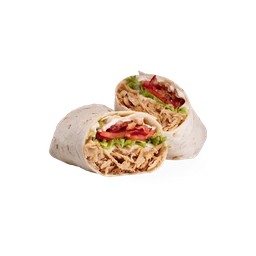 #26 Bacon Ranch Chicken Cheese Steak (Wrap)Jersey Mike's · Updated September 23, 2026
 #7 Halal Turkey Breast and Provolone (Giant)Jersey Mike's · Updated September 23, 2026
Research sources
The published research used in the PRūF app.
- Re-evaluation of twelve modified starches (E1404–E1452) as food additives
EFSA ANS Panel · 2017-10-05 · Accessed 2026-09-05
- Re-evaluation of starch sodium octenyl succinate (E1450) for infants below 16 weeks and follow-up for all population groups
EFSA FAF Panel · 2020-08-13 · Accessed 2026-09-05
- Commission Regulation (EU) 2026/196: selected hydrocolloids and E1450
European Union · 2026-01-29 · Accessed 2026-09-05
- 21 CFR 172.892: Food starch-modified
FDA / eCFR · eCFR current through 2026-09-03 · Accessed 2026-09-05
- Modified starches: evaluation database
WHO / JECFA · 2021 specification revision · Accessed 2026-09-05
- List of Permitted Starch-Modifying Agents
Health Canada · 2025-10-20 · Accessed 2026-09-05
- Re-evaluation: follow-up call for modified starches other than E1450
European Commission · 2024-03-20 call; current status inspected · Accessed 2026-09-05
- Food additive mixtures and type 2 diabetes incidence: NutriNet-Santé
Payen de la Garanderie et al. / PLOS Medicine · 2025-04-08 · Accessed 2026-09-05
- Food additive emulsifiers and risk of cardiovascular disease: prospective cohort study
Sellem et al. / BMJ · 2023-09-06 · Accessed 2026-09-05
- Octenyl Succinic Anhydride-Modified Starch Attenuates Body Weight Gain and Changes Intestinal Environment of High-Fat Diet-Fed Mice
Chen et al. / Foods · 2022-09-23 · Accessed 2026-09-05
- Food Allergies
FDA · Accessed 2026-09-05
- CPG Sec. 578.100 Starches: Common or Usual Names
FDA · 1980-10-01 · Accessed 2026-09-05
Know your food.
Anywhere.
Explore restaurant ingredients and nutrition in the PRūF iPhone app.