
Canola Oil
Canola oil comes from rapeseed varieties bred to contain little erucic acid. It supplies mostly unsaturated fats and is used in cooking, dressings and prepared foods. Refined, cold-pressed and high-oleic versions differ in composition and how they respond to heat.
Also known as
canola oil · low-erucic acid rapeseed oil · low erucic acid rapeseed oil · LEAR oil · rapeseed oil, low erucic acid · rape oil, canola · oils, glyceridic, canola · canola oil glyceridic · Canbra oil · Brassica napus oil, low erucic acid
Why PRūF tracks it
Human evidence gives little basis for concern about ordinary food-grade canola use, particularly when replacing saturated fats, while animal signals, contaminant exposure and repeated heating require context rather than blanket reassurance.
Read the research
Canola oil provides mostly unsaturated fats, including oleic, linoleic and alpha-linolenic acids. In controlled feeding studies, replacing a higher-saturated-fat diet with canola lowered LDL cholesterol; this does not mean that simply adding more oil improves health. Large observational studies also associate canola intake with lower mortality, but they cannot eliminate differences in other habits or prove cause and effect. Not every result favors canola: a small meal study found higher short-term triglyceride and IL-6 responses than coconut oil, and some disease-model animal studies reported adverse effects.
These findings deserve attention but do not establish chronic inflammation, dementia or shortened life in people eating ordinary amounts. Low-erucic canola must be distinguished from high-erucic rapeseed oil. Erucic acid and contaminants formed during refining have exposure limits or safety guidance, and measured amounts vary. Repeated frying also changes oil chemistry; an ingredient name cannot reveal how hot or how often an oil was used.
The review considers the overall human evidence for food-grade canola in a balanced diet, particularly as a replacement for saturated fats, with processing and heating conditions considered separately.
Research reviewed on September 5, 2026 · 12 sources
Matches
1–12 of 1122 matches
 (4) Oreo Cheesecake PancakesIHOP · Updated September 23, 2026
 #1 BLT (Giant)Jersey Mike's · Updated September 23, 2026
 #1 BLT (Mini)Jersey Mike's · Updated September 23, 2026
 #1 BLT (Regular)Jersey Mike's · Updated September 23, 2026
 #1 Porkroll, Egg and Cheese (Mini)Jersey Mike's · Updated September 23, 2026
 #1 Porkroll, Egg and Cheese (Regular)Jersey Mike's · Updated September 23, 2026
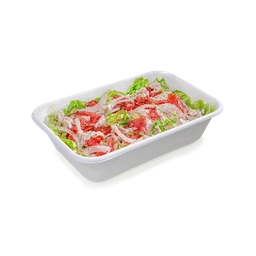 #10 Tuna Fish (Bowl)Jersey Mike's · Updated September 23, 2026
 #10 Tuna Fish (Giant)Jersey Mike's · Updated September 23, 2026
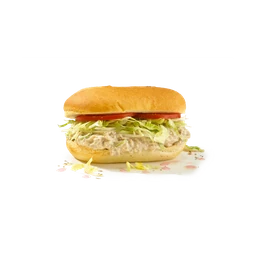 #10 Tuna Fish (Mini)Jersey Mike's · Updated September 23, 2026
 #10 Tuna Fish (Regular)Jersey Mike's · Updated September 23, 2026
 #10 Tuna Fish (Wrap)Jersey Mike's · Updated September 23, 2026
 #11 Stickball Special (Bowl)Jersey Mike's · Updated September 23, 2026
Research sources
The published research used in the PRūF app.
- Low-erucic acid rapeseed oil identity
FDA · 2026-04-21 page stamp · Accessed 2026-09-05
- Named vegetable oils, CXS 210-1999
FAO/WHO Codex · 2026 edition, July corrigendum · Accessed 2026-09-05
- Erucic acid in feed and food, corrected assessment
EFSA CONTAM · 2016, readopted 2017-04-05 · Accessed 2026-09-05
- EU 2026/1825 contaminant limits amendment
European Union · Adopted 2026-07-29; published 2026-07-30 · Accessed 2026-09-05
- Louisiana R.S. 40:662 seed-oil disclosure
Louisiana State Legislature · Acts 2025 No.463; effective 2028-01-01 · Accessed 2026-09-05
- Conventional and high-oleic canola feeding trial
Bowen and colleagues · 2019-02-15 · Accessed 2026-09-05
- Butter and plant-based oils intake and mortality
Zhang and colleagues · 2025-03-06 · Accessed 2026-09-05
- Canola versus coconut mixed-meal responses
Kienēs and colleagues · 2025-06-19 · Accessed 2026-09-05
- Canola diet in transgenic Alzheimer-model mice
Lauretti and Praticò · 2017-12-07 · Accessed 2026-09-05
- Canola, sex and survival in hypertensive stroke-prone rats
Nishikawa and colleagues · 2022 · Accessed 2026-09-05
- Repeated frying alters oils and French fries
Aduol and colleagues · 2025-09-01 · Accessed 2026-09-05
- MCPD and glycidyl esters in refined oils
FDA · Current accessed 2026-09-05 · Accessed 2026-09-05
Know your food.
Anywhere.
Explore restaurant ingredients and nutrition in the PRūF iPhone app.