
Polysorbate 60
Polysorbate 60 helps oil and water stay mixed and gives foods a steady texture. It is used in cakes, whipped toppings, dressings and some frozen desserts. Also called E435 or Tween 60, it differs from polysorbate 80 and sorbitan monostearate.
Also known as
polysorbate 60 · polyoxyethylene (20) sorbitan monostearate · polyoxyethylene sorbitan monostearate · PEG-20 sorbitan stearate · PEG sorbitan stearate · Tween 60 · E435 · E 435 · INS 435
Why PRūF tracks it
The review considers digestive effects at high doses, direct but uncertain gut-barrier signals, and sparse modern human evidence for polysorbate 60; some modeled combined-polysorbate exposures approach or exceed protective intake limits; this does not establish harm from ordinary food use.
Read the research
Polysorbate 60 is an emulsifier made from sorbitol derivatives and fatty acids. Much of its water-loving portion passes through the gut without being absorbed. Large dietary amounts have caused diarrhea and other digestive effects in animals. Direct experiments also found increased bacterial passage across one cultured intestinal cell model, while another cell model showed no increase; concentrated solutions affected rat intestinal tissue.
These studies identify questions about the gut barrier, but do not establish that normal food use causes bowel disease. A small, old placebo-controlled human study found no consistent harmful effects after four weeks, but modern studies isolating polysorbate 60 are scarce. Recent cancer cohort research included too few consumers to estimate its individual association reliably. Regulators assess several polysorbates together.
JECFA reaffirmed a group acceptable daily intake of 25 milligrams per kilogram of body weight in 2026; Japan previously chose 10 using a different study. EFSA estimates ranged from below this higher limit to above it under assumptions about repeatedly choosing the same products. These estimates concern the combined group and are not measurements of harm. Food-category and purity limits apply, including EU controls on manufacturing residues.
Findings for polysorbate 80 or sorbitan monostearate cannot automatically be assigned to polysorbate 60.
Research reviewed on September 5, 2026 · 12 sources
Matches
1–12 of 209 matches
 (4) Pumpkin Spice PancakesIHOP · Updated September 23, 2026
 24 Count Original Glazed Doughnut DotsKrispy Kreme · Updated September 24, 2026
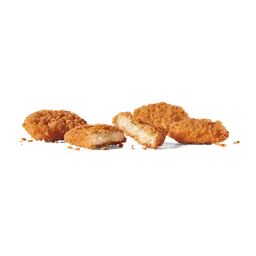 4PC Chicken NuggetsJack in the Box · Updated September 23, 2026
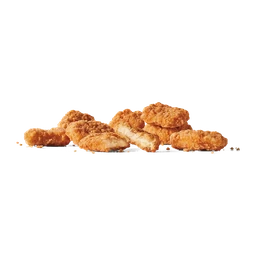 8PC Chicken NuggetsJack in the Box · Updated September 23, 2026
 All American Club® (6")Subway · Updated September 23, 2026
 All American Club® FootlongSubway · Updated September 23, 2026
 All American Club® Protein BowlSubway · Updated September 23, 2026
 All American Club® SaladSubway · Updated September 23, 2026
 All American Club® WrapSubway · Updated September 23, 2026
 Apple Streusel DonutDunkin' · Updated September 22, 2026
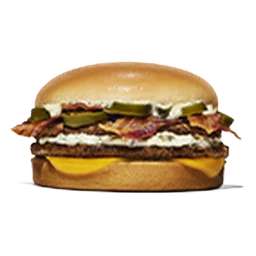 Bacon Blaze Jalapeño DoubleWhataburger · All-Time Favorites & Limited Time Offers · Updated August 2, 2026
 Big Ol' BrownieTexas Roadhouse · Updated September 23, 2026
Research sources
The published research used in the PRūF app.
- 21 CFR 172.836: Polysorbate 60
FDA / eCFR · Current through 2026-09-02 · Accessed 2026-09-05
- Regulation (EC) 1333/2008: food-additive permissions
European Union · Consolidated 2026-08-18 · Accessed 2026-09-05
- Regulation (EU) 231/2012: additive specifications, E435 and general ethylene-oxide rule
European Union · Consolidated 2026-08-18 · Accessed 2026-09-05
- 102nd meeting: summary and conclusions, polysorbates
FAO/WHO JECFA · Meeting 2026-06-09 to 2026-06-18; summary public July 2026 · Accessed 2026-09-05
- Re-evaluation of polyoxyethylene sorbitan esters E432-E436 as food additives
EFSA ANS Panel · 2015-07-17; amended 2018-12-10 · Accessed 2026-09-05
- Evaluation Report of Food Additives: Polysorbates 20, 60, 65 and 80
Food Safety Commission of Japan · 2007-06 · Accessed 2026-09-05
- Influence of surface-active food additives on the integrity and permeability of rat intestinal mucosa
Tagesson and Edling / Food and Chemical Toxicology · 1984 · Accessed 2026-09-05
- Translocation of Crohn's disease Escherichia coli across M-cells: contrasting effects of soluble plant fibres and emulsifiers
Roberts et al. / Gut · 2010 · Accessed 2026-09-05
- Teratology study of Tween 60 in rats
Ema et al. / Drug and Chemical Toxicology · 1988 · Accessed 2026-09-05
- Mechanisms of toxicities of some detergents added to a diet and of the ameliorating effect of dietary fiber in the rat
Kimura et al. / Journal of Nutritional Science and Vitaminology · 1982 · Accessed 2026-09-05
- Food additive emulsifiers and cancer risk: Results from the French prospective NutriNet-Sante cohort
Sellem et al. / PLOS Medicine · 2024-02-13 · Accessed 2026-09-05
- Polyoxyethylene (20) sorbitan monostearate: revised specifications
FAO/WHO JECFA · 2014 · Accessed 2026-09-05
Know your food.
Anywhere.
Explore restaurant ingredients and nutrition in the PRūF iPhone app.