
Mono- and Diglycerides of Fatty Acids
Mono- and diglycerides are mixtures made from glycerol and fatty acids in edible fats and oils. They help oil and water mix and improve food texture. Their composition depends on the source fats and processing, so the name covers different mixtures.
Also known as
mono- and diglycerides · mono- and diglycerides of fatty acids · mono- and diglycerides of edible fatty acids · mono- and diglycerides of edible fats and oils · mixed mono- and diglycerides · glycerides, mixed mono- and di- · monoglycerides and diglycerides · mono- and di-glycerides · E471 · E 471 · INS 471
Common questions
Browse menu matchesWhat are mono- and diglycerides made from?
Manufacturers start with edible fats or oils and process them with glycerol, also called glycerin. Think of glycerol as a small backbone with three attachment points for fatty acids, the building blocks of fats. Ordinary triglycerides have a fatty acid at all three points; monoglycerides have one and diglycerides have two. Manufacturers make the additive by rearranging these building blocks in fats and oils, or by combining glycerol with fatty acids separated from them. The resulting mixture is then purified. It can come from one fat or oil or a blend, so the words ‘mono- and diglycerides’ describe the ingredient’s structure without telling you which source fat or oil was used.
FDA definition of mono- and diglycerides · EFSA ingredient identity and manufacture
Which restaurants list mono- and diglycerides?
Explore mono- and diglycerides matches from these restaurant menus:
Arby's · Baja Fresh · Buffalo Wild Wings · Burger King · Chick-fil-A · Culver's · Dairy Queen · Del Taco · Domino's · Dunkin' · Firehouse Subs · IHOP · In-N-Out Burger · Jack in the Box · Jamba · Jersey Mike's · Jimmy John's · KFC · Krispy Kreme · Little Caesars · McAlister's Deli · McDonald's · Noodles & Company · Panda Express · Panera Bread · Papa Johns · Pizza Hut · Popeyes · Sonic · Starbucks · Subway · Taco Bell · Texas Roadhouse · Wendy's · Whataburger
Which menu items list mono- and diglycerides?
Browse 1375 menu matches for mono- and diglycerides. Search by item name or choose a restaurant, then open an item to read its ingredient statement and any listed alternatives.
See all menu matchesWhy PRūF tracks it
Regulatory reviews are reassuring at reported uses, but varying mixtures, processing contaminants and laboratory findings leave uncertainty; one cancer study reported associations that did not remain significant after adjustment for multiple comparisons.
Read the research
Mono- and diglycerides help stabilize foods such as bread, spreads and desserts. They are digested into glycerol and fatty acids, and European assessments found no safety concern at reported uses, including specified infant uses. That conclusion has limits: there were no infant clinical safety trials, and one developmental study had reporting problems that prevented its use. Product composition and purity matter.
European rules now limit toxic elements, erucic acid and contaminants that can arise during processing, with some tighter requirements for infant foods. Laboratory studies found that individual monoesters can alter gut bacteria, while a tested commercial mixture did not cause the same overall changes. These experiments do not establish disease from eating ordinary foods. A French study linked higher estimated E471 intake to overall, breast and prostate cancer, but the associations did not remain statistically significant after accounting for multiple comparisons and cannot establish causation.
Other reports combining E471 with chemically different esters cannot show which additive explains an association. Animal findings for individual monoesters also vary with the preparation and feeding conditions. Better controlled human evidence is needed to resolve these uncertainties.
Research reviewed on September 5, 2026 · 12 sources
Matches
1–12 of 1375 matches
 (4) Cinn-a-Stack PancakesIHOP · Updated September 23, 2026
 (4) Cupcake PancakesIHOP · Updated September 23, 2026
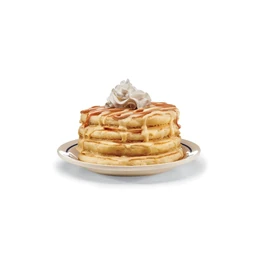 (4) Mexican Tres Leches PancakesIHOP · Updated September 23, 2026
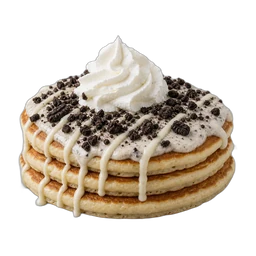 (4) Oreo Cheesecake PancakesIHOP · Updated September 23, 2026
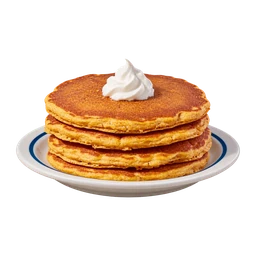 (4) Pumpkin Spice PancakesIHOP · Updated September 23, 2026
 #1 BLT (Wrap)Jersey Mike's · Updated September 23, 2026
 #10 Tuna Fish (Wrap)Jersey Mike's · Updated September 23, 2026
 #11 Stickball Special (Wrap)Jersey Mike's · Updated September 23, 2026
 #12 Cancro Special (Wrap)Jersey Mike's · Updated September 23, 2026
 #13 The Original Italian (Wrap)Jersey Mike's · Updated September 23, 2026
 #14 The Veggie (Wrap)Jersey Mike's · Updated September 23, 2026
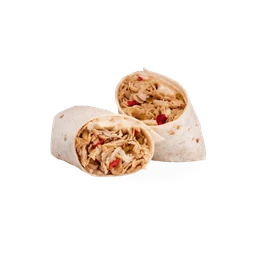 #16 Halal Chicken Philly (Wrap)Jersey Mike's · Updated September 23, 2026
Research sources
The published research used in the PRūF app.
- 21 CFR184.1505 Mono- and diglycerides
FDA / eCFR · Current through September3,2026 · Accessed 2026-09-05
- Re-evaluation of E471 as food additives
EFSA ANS Panel · 2017-11-10 · Accessed 2026-09-05
- Infant E471 re-evaluation and follow-up for all population groups
EFSA FAF Panel · 2021-11-08; amended2022-12-22 · Accessed 2026-09-05
- Regulation2023/1428: E471specifications
European Commission · Adopted2023-07-07; entry2023-07-30; glycidyl step2024-01-30 · Accessed 2026-09-05
- Permitted emulsifying, gelling, stabilizing or thickening agents
Health Canada · Current list inspected2026-09-05 · Accessed 2026-09-05
- Emulsifiers and cancer: NutriNet-Sante cohort
Study authors · 2024-02-13 · Accessed 2026-09-05
- Emulsifiers and cardiovascular disease in NutriNet-Sante
Study authors · 2023-09-06 · Accessed 2026-09-05
- Emulsifiers and type2diabetes: NutriNet-Sante
Study authors · 2024-05-01 indexed · Accessed 2026-09-05
- Dietary emulsifier sodium stearoyl lactylate alters microbiota in vitro
Study authors · 2020-05-15 · Accessed 2026-09-05
- Direct impact of commonly used dietary emulsifiers on human gut microbiota
Study authors · 2021-01-22 · Accessed 2026-09-05
- Glycerol monolaurate and metabolic effects in low-fat-fed mice
Study authors · 2017-11-13online;2018issue · Accessed 2026-09-05
- High-dose glycerol monolaurate and indigenous microbiota
Study authors · 2019-08-23 · Accessed 2026-09-05
Know your food.
Anywhere.
Explore restaurant ingredients and nutrition in the PRūF iPhone app.