
Carrageenan
Carrageenan is extracted from red seaweeds and helps thicken, stabilize, or gel foods. It is used in dairy products, plant-based drinks, desserts, and processed meats. Its main forms are kappa, iota, and lambda, which differ in their structure and behavior.
Also known as
carrageenan · carrageenin · carrageenan gum · Chondrus extract · Irish moss extract · carragheen gum · refined carrageenan · kappa-carrageenan · iota-carrageenan · lambda-carrageenan · E 407 · E407 · INS 407 · INS407
Why PRūF tracks it
The review considers uncertain intestinal and metabolic signals, conflicting small human trials, and observational disease associations, with food type, dose, and carrageenan composition affecting how the evidence applies to consumers.
Read the research
Carrageenan is a family of large carbohydrate molecules used to control food texture. Food-grade carrageenan differs from deliberately degraded carrageenan, called poligeenan, which has caused intestinal injury and tumors in animals. That distinction matters, but questions remain about smaller fragments in commercial preparations and their behavior during digestion. EFSA retained a temporary daily intake limit of 75 mg/kg body weight while requesting better evidence; some modeled high intakes exceeded that limit, although exposure could be overestimated.
Small human trials give mixed results. One found increased intestinal permeability while its primary insulin-sensitivity measures were unchanged. A later trial reported a change within the carrageenan group, which does not establish a difference from placebo. A tiny longer trial in ulcerative colitis reported more relapses, while a shorter trial found no worsening.
A prediabetes pilot did not show significant between-group differences in its primary glucose measures. French observational studies linked estimated intake with diabetes and breast cancer, but they share a cohort and cannot establish causation. These findings warrant attention without implying that eating carrageenan necessarily causes disease. EU restrictions on certain jelly mini-cups concern choking; other permitted uses have product-specific conditions.
Research reviewed on September 5, 2026 · 12 sources
Matches
1–12 of 715 matches
 (4) Double Blueberry PancakesIHOP · Updated September 23, 2026
 (4) Mexican Tres Leches PancakesIHOP · Updated September 23, 2026
 (4) New York Cheesecake PancakesIHOP · Updated September 23, 2026
 (4) Pumpkin Spice PancakesIHOP · Updated September 23, 2026
 (4) Strawberry Banana PancakesIHOP · Updated September 23, 2026
 #7 Halal Turkey Breast and Provolone (Giant)Jersey Mike's · Updated September 23, 2026
 #7 Halal Turkey Breast and Provolone (Mini)Jersey Mike's · Updated September 23, 2026
 #7 Halal Turkey Breast and Provolone (Regular)Jersey Mike's · Updated September 23, 2026
 #9 Halal Club Supreme (Giant)Jersey Mike's · Updated September 23, 2026
 #9 Halal Club Supreme (Mini)Jersey Mike's · Updated September 23, 2026
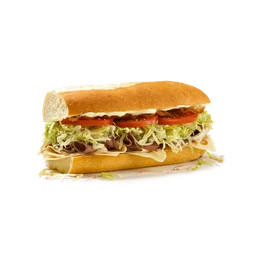 #9 Halal Club Supreme (Regular)Jersey Mike's · Updated September 23, 2026
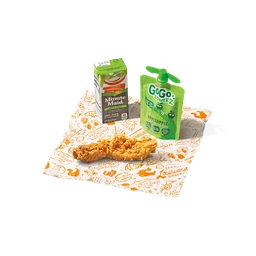 1Pc Tender Kid's MealPopeyes · Updated September 23, 2026
Research sources
The published research used in the PRūF app.
- Re-evaluation of E407 and E407a
EFSA ANS Panel · 2018-04-26 · Accessed 2026-09-05
- Substances Added to Food: Carrageenan
FDA · Page current July 2026 · Accessed 2026-09-05
- EU food additive authorization, current consolidation
European Union · Consolidated 2026-08-18 · Accessed 2026-09-05
- Commission Regulation 2026/196
European Commission · Adopted 2026-01-28; published 2026-01-29 · Accessed 2026-09-05
- E407 specifications in Regulation 231/2012
European Union · Consolidated 2026-08-18 · Accessed 2026-09-05
- Carrageenan and insulin resistance in humans
Study authors · 2024-11-26 · Accessed 2026-09-05
- Effect of five emulsifiers on intestinal and metabolic health
Study authors · Online 2025-08-13; issue April 2026 · Accessed 2026-09-05
- Carrageenan-free diet in prediabetes: randomized pilot
Study authors · 2020 · Accessed 2026-09-05
- Carrageenan and relapse in ulcerative colitis
Study authors · 2017 · Accessed 2026-09-05
- Carrageenan challenge in quiescent ulcerative colitis
Study authors · 2023 · Accessed 2026-09-05
- Food additive emulsifiers and cancer risk in NutriNet-Santé
Study authors · 2024-02-13 · Accessed 2026-09-05
- Food additive emulsifiers and type 2 diabetes
Study authors · 2024-04-23 · Accessed 2026-09-05
Know your food.
Anywhere.
Explore restaurant ingredients and nutrition in the PRūF iPhone app.