
Sodium stearoyl lactylate
Sodium stearoyl lactylate helps oil and water stay mixed and strengthens dough. It is used in breads, baked goods, desserts and other foods to improve texture. Called E 481, it is a food-grade mixture made from fatty acids and lactic acid.
Also known as
sodium stearoyl lactylate · sodium stearoyl-2-lactylate · sodium stearoyl lactate · E481 · E 481 · INS 481(i) · INS 481i
Why PRūF tracks it
Laboratory cultures show changes in gut bacteria and butyrate production with uncertain relevance to people, while general toxicity data are reassuring and a human cohort found no clear overall-cancer association, leaving limited direct clinical evidence.
Read the research
Sodium stearoyl lactylate, or E 481, is a food emulsifier mixture. It is related to calcium stearoyl lactylate, E 482, but the two names identify different additives. EFSA set a shared daily intake value of 22 mg/kg body weight based on a one-year sodium-salt rat study. That study was reassuring for general toxicity; dedicated reproductive and lifetime cancer studies were missing from the assessment.
A Belgian exposure study found much lower estimated intakes when measured food concentrations replaced legal maximums, although a small proportion of children still exceeded the shared intake value. Exceeding that value does not itself demonstrate injury. A laboratory study using pooled human fecal bacteria found that sodium stearoyl lactylate reduced butyrate production and increased bacterial inflammatory signals. It did not test illness or intestinal damage in people.
A French cohort separately analyzed E 481 and found no clear association with overall cancer. Human intervention evidence specific to this additive remains sparse, and effects reported for other emulsifiers cannot be assigned to it automatically. Ingredient lists do not reveal the amount consumed.
Research reviewed on September 5, 2026 · 12 sources
Matches
1–12 of 371 matches
 12 oz. Ft. Worth Ribeye & Grilled ShrimpTexas Roadhouse · Updated September 23, 2026
 12 oz. Strip & Grilled Shrimp (in selected stores only)Texas Roadhouse · Updated September 23, 2026
 2 for $6 Grilled Chicken Big Fat TacoDel Taco · Updated September 23, 2026
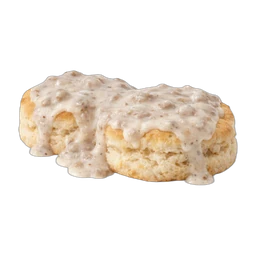 2 Scratch Biscuits and 8oz GravyMcDonald's · Updated September 22, 2026
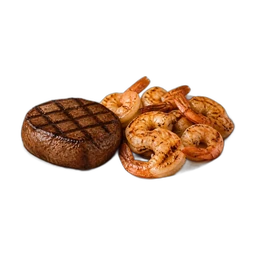 6 oz. Sirloin & Grilled ShrimpTexas Roadhouse · Updated September 23, 2026
 8 oz. Sirloin & Grilled ShrimpTexas Roadhouse · Updated September 23, 2026
 8 oz. Strip & Grilled Shrimp (in selected stores only)Texas Roadhouse · Updated September 23, 2026
 All-American Bacon SONIC Smasher™Sonic · Updated September 23, 2026
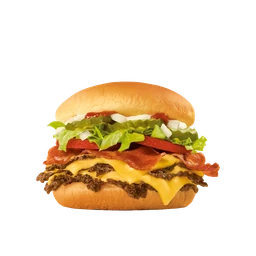 All-American Bacon Triple SONIC Smasher™Sonic · Updated September 23, 2026
 All-American DogSonic · Updated September 23, 2026
 All-American SONIC Smasher™Sonic · Updated September 23, 2026
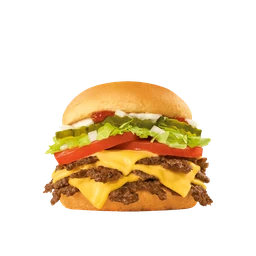 All-American Triple SONIC Smasher™Sonic · Updated September 23, 2026
Research sources
The published research used in the PRūF app.
- Re-evaluation of sodium stearoyl-2-lactylate (E 481) and calcium stearoyl-2-lactylate (E 482) as food additives
EFSA ANS Panel · 2013-05 · Accessed 2026-09-05
- Dietary Emulsifier Sodium Stearoyl Lactylate Alters Gut Microbiota in vitro and Inhibits Bacterial Butyrate Producers
Elmén et al. / Frontiers in Microbiology · 2020-05-15 · Accessed 2026-09-05
- Food additive emulsifiers and cancer risk: Results from the French prospective NutriNet-Santé cohort
Sellem et al. / PLOS Medicine · 2024-02-13 · Accessed 2026-09-05
- Dietary exposure of the Belgian population to emulsifiers E481 (sodium stearoyl-2-lactylate) and E482 (calcium stearoyl-2-lactylate)
Bel S, Struyf T, Fierens T, Jacobs G, Vinkx C, Bellemans M, Voorspoels S, De Ridder K. · 2018 · Accessed 2026-09-05
- A one-year oral toxicity study of sodium stearoyl lactylate (SSL) in rats
Lamb et al. / Food and Chemical Toxicology · 2010 · Accessed 2026-09-05
- Sodium stearoyl-2-lactylate evaluation database
WHO/JECFA · 1973 evaluation; later specification revisions · Accessed 2026-09-05
- Regulation 1333/2008 consolidated additive authorizations
European Union / EUR-Lex · 2026-08-18 · Accessed 2026-09-05
- Regulation 231/2012: E481 specifications
European Union / EUR-Lex · 2026-08-18 consolidation · Accessed 2026-09-05
- Substances Added to Food: sodium stearoyl-2-lactylate
US Food and Drug Administration · 2026-07-28 · Accessed 2026-09-05
- List 4: Permitted Emulsifying, Gelling, Stabilizing or Thickening Agents, S.18
Health Canada · 2025-10-20 · Accessed 2026-09-05
- Food additive emulsifiers and risk of cardiovascular disease in the NutriNet-Santé cohort: prospective cohort study
Sellem et al. / The BMJ · 2023-09-06 · Accessed 2026-09-05
- Approved additives and E numbers
UK government / FSA · Current checked 2026-09-05 · Accessed 2026-09-05
Know your food.
Anywhere.
Explore restaurant ingredients and nutrition in the PRūF iPhone app.