
Sodium nitrite
Sodium nitrite is a salt used in cured meat and some fish. It helps stop harmful germs, keeps the pink color, and adds cured flavor. Its food label code is E 250; it differs from sodium nitrate and table salt.
Also known as
nitrous acid, sodium salt · NaNO2 · E250 · E 250 · INS 250
Why PRūF tracks it
Nitrite can impair oxygen transport at excessive doses and contribute to cancer-causing compounds under some conditions, while new diabetes and hypertension associations do not establish that ordinary food use causes disease.
Read the research
Sodium nitrite helps control dangerous bacteria in cured foods, but its use requires limits. Excess exposure can change hemoglobin into a form that carries less oxygen. EFSA set an acceptable daily intake of 0.07 milligrams of nitrite ion per kilogram of body weight, generally above estimated exposure from additives alone, with slight exceedance among children at high intake. This value is not a threshold at which illness suddenly begins.
Nitrite can also help form some cancer-causing N-nitroso compounds during processing or digestion, depending on the food and conditions. IARC’s probable-carcinogen assessment applies to ingestion under conditions that cause this reaction. It does not mean every serving causes cancer. In 2026, French studies linked estimated sodium-nitrite intake with diabetes and hypertension, while cancer findings were less consistent.
These studies share one cohort and cannot prove causation. A UK review found no clear significant population risk within permitted uses, and other studies include null findings. The review considers the combination of biological mechanisms and meaningful but uncertain human signals. Food uses remain permitted under specific limits; concentrated-product sales restrictions do not amount to a general food ban.
Research reviewed on September 5, 2026 · 12 sources
Matches
1–12 of 521 matches
 #1 BLT (Bowl)Jersey Mike's · Updated September 23, 2026
 #1 BLT (Giant)Jersey Mike's · Updated September 23, 2026
 #1 BLT (Mini)Jersey Mike's · Updated September 23, 2026
 #1 BLT (Regular)Jersey Mike's · Updated September 23, 2026
 #1 BLT (Wrap)Jersey Mike's · Updated September 23, 2026
 #11 Stickball Special (Bowl)Jersey Mike's · Updated September 23, 2026
 #11 Stickball Special (Giant)Jersey Mike's · Updated September 23, 2026
 #11 Stickball Special (Mini)Jersey Mike's · Updated September 23, 2026
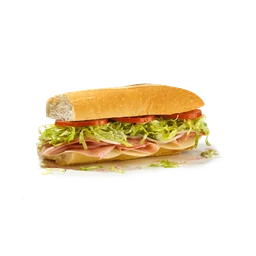 #11 Stickball Special (Regular)Jersey Mike's · Updated September 23, 2026
 #11 Stickball Special (Wrap)Jersey Mike's · Updated September 23, 2026
 #12 Cancro Special (Bowl)Jersey Mike's · Updated September 23, 2026
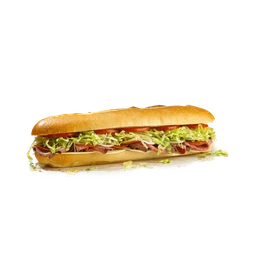 #12 Cancro Special (Giant)Jersey Mike's · Updated September 23, 2026
Research sources
The published research used in the PRūF app.
- Re-evaluation of potassium nitrite (E 249) and sodium nitrite (E 250) as food additives
EFSA ANS Panel · 2017-06-15 · Accessed 2026-09-05
- Ingested nitrate and nitrite: evaluation and rationale, Monographs Volume 94
IARC · 2010 · Accessed 2026-09-05
- Safety of Nitrates and Nitrites as Food Additives
UK Food Standards Agency / RSM UK · 2025 · Accessed 2026-09-05
- Risk assessment of N-nitrosamines in food
EFSA CONTAM Panel · 2023-03-28 · Accessed 2026-09-05
- Associations between preservative food additives and type 2 diabetes incidence in the NutriNet-Santé prospective cohort
Hasenböhler et al. / Nature Communications · 2026-01-07 · Accessed 2026-09-05
- Intake of food additive preservatives and incidence of cancer: results from the NutriNet-Santé prospective cohort
Hasenböhler et al. / BMJ · 2026-01-07 · Accessed 2026-09-05
- Preservative food additives, hypertension, and cardiovascular diseases: the NutriNet-Santé study
Hasenböhler et al. / European Heart Journal · 2026 · Accessed 2026-09-05
- 9 CFR 424.21: Use of food ingredients and sources of radiation
USDA FSIS / eCFR · Current through 2026-09-03 · Accessed 2026-09-05
- Regulation (EU) 2023/2108 amending nitrite/nitrate food-additive conditions
European Commission / EUR-Lex · 2023-10-06; main nitrite limits apply 2025-10-09 · Accessed 2026-09-05
- Nitrit: national rules for meat products
Danish Veterinary and Food Administration · Current page accessed 2026-09-05 · Accessed 2026-09-05
- AB 1109 / Health and Safety Code 108930: sodium nitrite sales
California Legislature · 2023-10-08; operative 2024-07-01 · Accessed 2026-09-05
- Congressional Record: passage of S. 289, Youth Poisoning Protection Act
US Senate / Government Publishing Office · 2026-08-03 · Accessed 2026-09-05
Know your food.
Anywhere.
Explore restaurant ingredients and nutrition in the PRūF iPhone app.