
Olive Oil
Olive oil is made from the fruit of the olive tree and is rich in monounsaturated fat. Virgin oils are extracted by physical methods, while other edible grades include refined oil. It adds fat, flavor, and texture to prepared foods.
Also known as
Olive Oil · Virgin Olive Oil · Extra Virgin Olive Oil
Why PRūF tracks it
Ordinary dietary use has not shown established human toxicity, but high-fat mouse experiments raise unresolved metabolic and tumor-progression questions, while repeated heating and refining contaminants require attention to processing and exposure.
Read the research
Olive oil covers several edible grades. Extra virgin and virgin oils are obtained by physical methods, while ordinary olive oil can blend refined and virgin oil; olive-pomace oil is a separate category. Refining and cultivar affect minor compounds, so benefits studied with extra virgin oil cannot automatically be assigned to every grade. Large Mediterranean-diet trials reduced cardiovascular events, but changed whole eating patterns and did not isolate olive oil.
Cohort studies associate replacing butter with olive oil with lower mortality, without proving causation. A small crossover trial found no overall LDL difference between higher and lower extra virgin oil intake within a plant-based diet. In 2025, EFSA found insufficient evidence for a separate claim that olive phenolics lower LDL cholesterol or systolic blood pressure. New mouse studies report fat-cell, glucose-control, and implanted-tumor metastasis signals under high-fat conditions; they do not establish those outcomes in people eating ordinary amounts.
A small eight-week trial in healthy women found no blood-pressure difference from sunflower oil and mixed other markers; an LDL rise within the olive group does not establish comparative harm. Repeated heating depletes phenolics, and refined grades require contaminant controls.
Research reviewed on September 5, 2026 · 12 sources
Matches
1–12 of 340 matches
 #1 BLT (Wrap)Jersey Mike's · Updated September 23, 2026
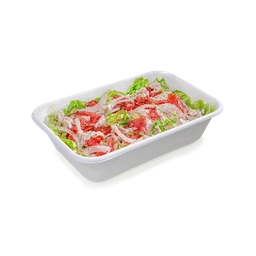 #10 Tuna Fish (Bowl)Jersey Mike's · Updated September 23, 2026
 #10 Tuna Fish (Giant)Jersey Mike's · Updated September 23, 2026
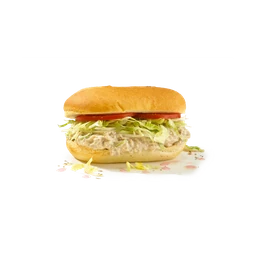 #10 Tuna Fish (Mini)Jersey Mike's · Updated September 23, 2026
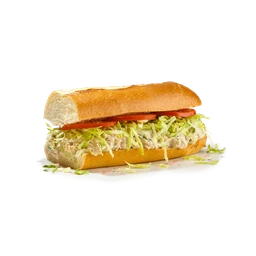 #10 Tuna Fish (Regular)Jersey Mike's · Updated September 23, 2026
 #10 Tuna Fish (Wrap)Jersey Mike's · Updated September 23, 2026
 #11 Stickball Special (Bowl)Jersey Mike's · Updated September 23, 2026
 #11 Stickball Special (Giant)Jersey Mike's · Updated September 23, 2026
 #11 Stickball Special (Mini)Jersey Mike's · Updated September 23, 2026
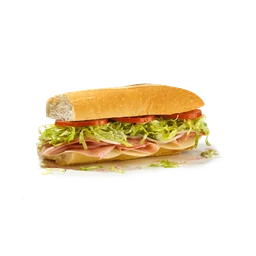 #11 Stickball Special (Regular)Jersey Mike's · Updated September 23, 2026
 #11 Stickball Special (Wrap)Jersey Mike's · Updated September 23, 2026
 #12 Cancro Special (Bowl)Jersey Mike's · Updated September 23, 2026
Research sources
The published research used in the PRūF app.
- CXS 33-1981 Standard for Olive Oils and Olive Pomace Oils
FAO/WHO Codex · Revised 2024; reformatted and republished 2026 · Accessed 2026-09-05
- Correction to 2018 oleic acid qualified health claim letter
FDA · 2020-07-16 · Accessed 2026-09-05
- Phenolic compounds naturally present in olive oil and lowering of blood LDL-cholesterol and systolic blood pressure, therefore reducing coronary heart disease risk
EFSA NDA Panel · 2025-05-23 · Accessed 2026-09-05
- Primary Prevention of Cardiovascular Disease with a Mediterranean Diet Supplemented with Extra-Virgin Olive Oil or Nuts
Estruch and colleagues · 2018-06-13 online · Accessed 2026-09-05
- Recipe for Heart Health: A Randomized Crossover Trial on Cardiometabolic Effects of Extra Virgin Olive Oil Within a Whole-Food Plant-Based Vegan Diet
Krenek and colleagues · 2024-07-24 · Accessed 2026-09-05
- Butter and Plant-Based Oils Intake and Mortality
Zhang and colleagues · 2025-03-06 online; May issue · Accessed 2026-09-05
- Dietary oleic acid drives obesogenic adipogenesis via LXR signaling
Wing and colleagues · 2025-04-11 online; April 22 issue · Accessed 2026-09-05
- An Olive Oil-Based High-Fat Diet Promotes Obesity-Driven Metastasis of Triple-Negative Breast Cancer
Avellino and colleagues · 2025; December 15 final issue · Accessed 2026-09-05
- An extra virgin olive oil diet impairs glycemic control, but mitigates high-fat diet-induced inflammation compared to coconut oil in mice
Study authors · 2026-04-28 · Accessed 2026-09-05
- Regulation (EU) 2026/1825 amending 3-MCPD and glycidyl ester food limits
European Commission · Adopted 2026-07-29; published 2026-07-30 · Accessed 2026-09-05
- Deep Frying in Extra-Virgin Olive Oil: Evaluating the Influence of the Type of Food and Breading on the Degradation of Phenolic Compounds
Study authors · 2026-05-27 online; June 10 issue · Accessed 2026-09-05
- Cardiovascular effects of extra virgin olive oil in healthy reproductive-aged women: a randomized controlled trial
Morris et al. / Pregnancy Hypertension · 2026-01-10 online; March issue · Accessed 2026-09-05
Know your food.
Anywhere.
Explore restaurant ingredients and nutrition in the PRūF iPhone app.