
EDTA (ethylenediaminetetraacetic acid; food-use salts)
EDTA binds metals that can speed oxidation and discoloration in food. Its calcium disodium and disodium salts help preserve color, flavor and stability in selected sauces, drinks and canned foods. These salts have different identities and permitted uses across countries.
Also known as
EDTA · ethylenediaminetetraacetic acid · edetic acid · calcium disodium EDTA · calcium disodium edetate · calcium disodium ethylenediaminetetraacetate · disodium EDTA · disodium edetate · disodium ethylenediaminetetraacetate · E 385 · E385 · INS 385 · INS385 · INS 386 · INS386
Why PRūF tracks it
Low oral absorption and modeled exposure below the daily value provide reassurance, while older toxicity data and newer mouse findings leave uncertainty about intestinal and metabolic effects at dietary exposure.
Read the research
Food-use EDTA salts bind trace metals, helping protect foods from oxidation and discoloration. Only a small fraction is absorbed after swallowing. JECFA retains a daily value of 2.5 mg/kg body weight expressed as calcium disodium EDTA, equivalent to about 1.9 mg/kg as EDTA. These amounts are not interchangeable.
EFSA’s 2024 preliminary exposure models for E385 were below that value, and it allowed additional reproductive studies to be waived on that basis while requesting other updated information. This was a data call, not a completed new safety assessment. A 2021 mouse study found worse inflammation and tumor outcomes in induced colitis models. Its healthy-mouse barrier experiment used rectal exposure, not feeding.
A 2025 mouse study reported changes in gut bacteria and female food-adjusted fat gain, without demonstrating human harm or benefit. A 2026 cooked-bean experiment reported liver and kidney changes, but had uncertain EDTA identity, unmeasured residues and inconsistent reporting. These findings warrant continued review, but do not establish that permitted dietary exposure causes cancer, mineral deficiency or organ damage in people.
Research reviewed on September 5, 2026 · 12 sources
Matches
1–12 of 653 matches
 #1 BLT (Bowl)Jersey Mike's · Updated September 23, 2026
 #1 BLT (Giant)Jersey Mike's · Updated September 23, 2026
 #1 BLT (Mini)Jersey Mike's · Updated September 23, 2026
 #1 BLT (Regular)Jersey Mike's · Updated September 23, 2026
 #1 BLT (Wrap)Jersey Mike's · Updated September 23, 2026
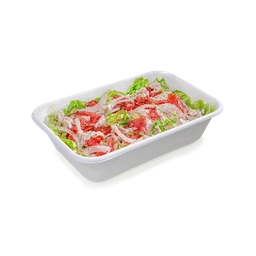 #10 Tuna Fish (Bowl)Jersey Mike's · Updated September 23, 2026
 #10 Tuna Fish (Giant)Jersey Mike's · Updated September 23, 2026
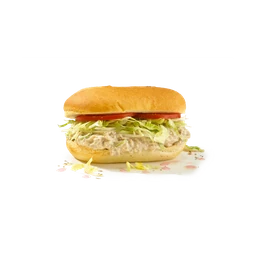 #10 Tuna Fish (Mini)Jersey Mike's · Updated September 23, 2026
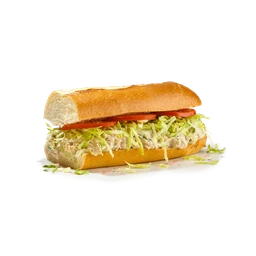 #10 Tuna Fish (Regular)Jersey Mike's · Updated September 23, 2026
 #10 Tuna Fish (Wrap)Jersey Mike's · Updated September 23, 2026
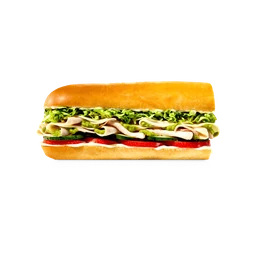 #12 Beach Club®Jimmy John's · Updated September 23, 2026
 #12 Beach Club® (Toasted)Jimmy John's · Updated September 23, 2026
Research sources
The published research used in the PRūF app.
- Calcium disodium EDTA: current evaluation record
WHO/JECFA · Evaluation 1973; current record inspected 2026-09-05 · Accessed 2026-09-05
- Toxicological evaluation: calcium disodium and disodium EDTA
WHO/JECFA via INCHEM · 1973 · Accessed 2026-09-05
- Assessment of ferric sodium EDTA as an ingredient
EFSA · 2018 · Accessed 2026-09-05
- Call for data on calcium disodium EDTA E385
EFSA · 2024-06-27; submission deadline 2024-12-31 · Accessed 2026-09-05
- EDTA aggravates colitis and colon carcinogenesis in mouse models
Study authors · 2021-03-04 · Accessed 2026-09-05
- Preservatives and sex-specific metabolic development in a mouse model
Study authors · Online 2025-04-17; July issue · Accessed 2026-09-05
- Earlier manuscript of Schell EDTA metabolic experiment
Schell et al., preprint · 2024-05-14 · Accessed 2026-09-05
- EDTA-treated cooked faba beans and liver/kidney effects in mice
Study authors · 2026-08-10 · Accessed 2026-09-05
- 21 CFR172.120 Calcium disodium EDTA
FDA/eCFR · Current through 2026-09-02 · Accessed 2026-09-05
- Disodium EDTA substances-added-to-food inventory
FDA · 2026-07-28 · Accessed 2026-09-05
- EU food-additive authorizations, E385
European Union · Consolidated 2026-08-18 · Accessed 2026-09-05
- List of Permitted Sequestering Agents
Health Canada · List published 2024-12-18; current inspected 2026-09-05 · Accessed 2026-09-05
Know your food.
Anywhere.
Explore restaurant ingredients and nutrition in the PRūF iPhone app.