
Palm Oil
Palm oil comes from the flesh of oil palm fruit. Its liquid form, palm olein, is used for cooking; firmer forms add texture to baked foods and spreads. It has more saturated fat than many liquid oils. Palm kernel oil differs.
Also known as
palm oil · palm fruit oil · Elaeis guineensis oil · palm butter · palm olein · palm stearin · palm superolein · red palm oil
Common questions
Browse menu matchesIs palm oil a seed oil?
No. Palm oil comes from the fleshy part of oil palm fruit. Palm olein is its liquid fraction. Palm kernel oil is a different oil made from the kernel inside the fruit, so the two names are not interchangeable.
Which restaurants list palm oil?
Explore palm oil matches from these restaurant menus:
Arby's · Buffalo Wild Wings · Burger King · Chick-fil-A · Culver's · Dairy Queen · Del Taco · Domino's · Dunkin' · Firehouse Subs · IHOP · Jack in the Box · Jamba · Jersey Mike's · Jimmy John's · KFC · Krispy Kreme · Little Caesars · McAlister's Deli · McDonald's · Noodles & Company · Panda Express · Panera Bread · Papa Johns · Pizza Hut · Popeyes · Sonic · Starbucks · Subway · Sweetgreen · Taco Bell · Texas Roadhouse · Wendy's · Whataburger
Which menu items list palm oil?
Browse 761 menu matches for palm oil. Search by item name or choose a restaurant, then open an item to read its ingredient statement and any listed alternatives.
See all menu matchesWhy PRūF tracks it
The review considers higher LDL cholesterol compared with many oils lower in saturated fat, while refining contaminants and infant-formula effects require separate consideration of processing quality, measured exposure and food composition.
Read the research
Palm oil and its fractions have different fat profiles: palm olein is more liquid, while palm stearin is firmer. Red palm oil retains more carotenoids than highly refined versions, but those nutrients do not remove its saturated fat. The main established concern is nutritional. Controlled studies generally find higher LDL cholesterol when palm oil replaces oils lower in saturated fat, although some palm-olein trials and one narrower review found similar lipid results.
The comparison matters: replacing partially hydrogenated fats can improve some markers, and a cholesterol change is not a direct measurement of heart attacks. Small recent trials did not show consistent differences in inflammation or liver fat. Refining can also create 3-MCPD esters and glycidyl esters, contaminants with kidney, reproductive or cancer relevance in animal studies; actual risk depends on their measured concentrations and intake. Levels can be reduced during production, and recent FDA surveys document reductions in infant formula.
Some palm-olein formulas produce firmer stools and lower calcium absorption, but lasting bone harm has not been established. The EU limits refining contaminants and has enacted tighter limits for specified baby foods from January 2027. Its separate deforestation rules concern sourcing and do not establish a food-safety ban.
Research reviewed on September 5, 2026 · 12 sources
Matches
97–108 of 761 matches
 Bavarian Kreme DonutDunkin' · Updated September 22, 2026
 BBQ Chicken SandwichTexas Roadhouse · Updated September 23, 2026
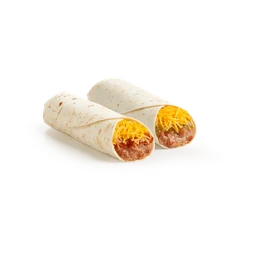 Bean & Cheese Burrito (Zesty Red or Tangy Green Sauce)Del Taco · Updated September 23, 2026
 Bean & Cheese CupDel Taco · Updated September 23, 2026
 Beef Tips with Mashed PotatoesTexas Roadhouse · Updated September 23, 2026
 Beef Tips with Seasoned RiceTexas Roadhouse · Updated September 23, 2026
 Beer Battered Fish TacoDel Taco · Updated September 23, 2026
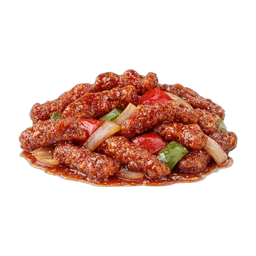 Beijing Beef®Panda Express · Updated July 12, 2026
 Belgian WaffleJamba · Bites · Updated August 30, 2026
 Berry BlondieStarbucks · Updated September 23, 2026
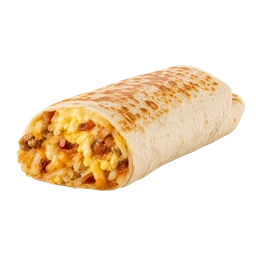 Big Breakfast BurritoIHOP · Updated September 23, 2026
 Big Breakfast®McDonald's · Updated September 22, 2026
Research sources
The published research used in the PRūF app.
- Standard for Named Vegetable Oils, CXS 210-1999
Codex Alimentarius · Current 2026 edition; July 2026 palm-table corrigendum · Accessed 2026-09-05
- WHO updates guidelines on fats and carbohydrates
World Health Organization · 2023-07-17 · Accessed 2026-09-05
- Palm Oil Consumption Increases LDL Cholesterol Compared with Vegetable Oils Low in Saturated Fat in a Meta-Analysis of Clinical Trials
Sun et al. / Journal of Nutrition · 2015-05-20 online · Accessed 2026-09-05
- Intake of Palm Olein and Lipid Status in Healthy Adults: A Meta-Analysis
Voon et al. / Advances in Nutrition · 2019-07 issue · Accessed 2026-09-05
- Comparing effects of soybean oil- and palm olein-based mayonnaise consumption on the plasma lipid and lipoprotein profiles in human subjects: a double-blind randomized controlled trial with cross-over design
Karupaiah et al. / Lipids in Health and Disease · 2016-08-17 · Accessed 2026-09-05
- Foods Fortified with Soybean or Palm Oil Show No Effect on Inflammation or Oxidized Low-Density Lipoprotein in Adults with Overweight or Obesity: a Secondary Analysis of a Randomized Placebo-Controlled Crossover Trial
Yang et al. / Current Developments in Nutrition · 2026-01-07 · Accessed 2026-09-05
- Dietary Soybean vs. Palm Oils Differ in Effects on Liver Fat in Adults With MAFLD: A 16-Week, Double-Masked, Randomized Controlled Trial
Belury et al. / Diabetes, Obesity and Metabolism · 2026-09-01 · Accessed 2026-09-05
- Palm Oil and Beta-palmitate in Infant Formula: A Position Paper
ESPGHAN Committee on Nutrition / Bronsky et al. · 2019-05 · Accessed 2026-09-05
- 3-Monochloropropane-1,2-diol (MCPD) Esters and Glycidyl Esters
FDA · Current page inspected; includes 2021-2023 monitoring · Accessed 2026-09-05
- Update of the risk assessment on 3-monochloropropane diol and its fatty acid esters
EFSA CONTAM Panel · 2018-01-10 · Accessed 2026-09-05
- Commission Regulation (EU) 2026/1825: maximum levels of 3-MCPD, its esters and glycidyl esters in certain foods
European Union · Adopted 2026-07-29; published 2026-07-30 · Accessed 2026-09-05
- Regulation on Deforestation-free Products: objectives and current implementation dates
European Commission · Current page inspected 2026-09-05 · Accessed 2026-09-05
Know your food.
Anywhere.
Explore restaurant ingredients and nutrition in the PRūF iPhone app.