
Cottonseed Oil
Cottonseed oil comes from cotton seeds and is usually refined for food use. It supplies mostly linoleic, palmitic and oleic fatty acids and is used in frying, dressings and baked foods. Refining reduces natural compounds that can be harmful at sufficient doses.
Also known as
cottonseed oil · cotton oil · cotton seed oil · unhydrogenated cottonseed oil · Gossypium hirsutum seed oil · upland cottonseed oil · oils, glyceridic, cottonseed
Why PRūF tracks it
Refining reduces cottonseed’s natural toxicants, while remaining questions concern residual exposure, processing contaminants and prolonged heating; short human trials show favorable lipid changes without establishing long-term benefits or harm.
Read the research
Food-grade cottonseed oil differs from crude oil and whole cottonseed. Refining reduces gossypol and related natural toxicants, but some unusual fatty acids can remain; their presence alone does not establish harmful exposure. Short randomized trials generally found favorable cholesterol changes compared with specific control oils. In a recent four-week trial, 95 adults were randomized and 91 completed the analysis.
The two higher cottonseed-oil doses lowered LDL cholesterol, while the lowest dose did not show a clear LDL difference. Participants receiving cottonseed oil also gained weight, and the groups received different amounts of food energy. An eight-week trial found no clear differences from olive oil in conventional inflammation or coagulation markers. A separate small trial found changes in selected lipid mediators, without measuring disease outcomes.
These studies received cotton-industry funding and cannot establish long-term cardiovascular benefits or complete safety. Prolonged repeated frying degrades the oil, but laboratory conditions do not reveal how a restaurant prepares a meal. European rules limit refining contaminants. Louisiana’s seed-oil notice begins in January 2028 and is a disclosure requirement.
Research reviewed on September 5, 2026 · 12 sources
Matches
1–12 of 450 matches
 10 PC. Chicken NuggetsWendy's · Updated September 23, 2026
 10 PC. Spicy Chicken NuggetsWendy's · Updated September 23, 2026
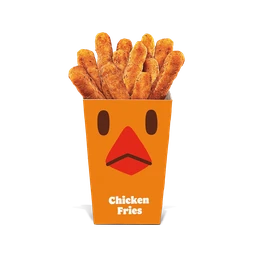 12 Pc. Chicken FriesBurger King · Updated September 23, 2026
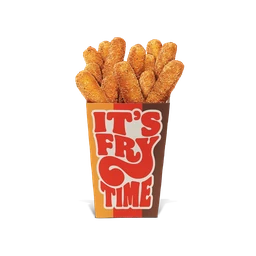 12 Pc. Mozzarella FriesBurger King · Updated September 23, 2026
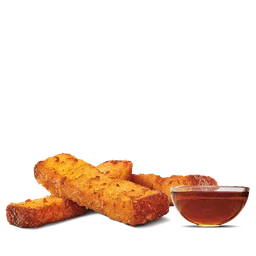 3 Pc. French Toast SticksBurger King · Updated September 23, 2026
 3pc. Crispy Chicken & Fries Box (Ranch or Chipotle Dipping Sauce)Del Taco · Updated September 23, 2026
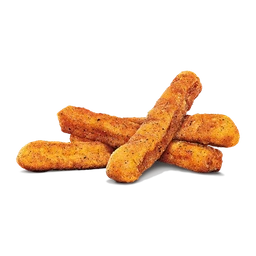 4 Pc. Chicken FriesBurger King · Updated September 23, 2026
 4 PC. Chicken NuggetsWendy's · Updated September 23, 2026
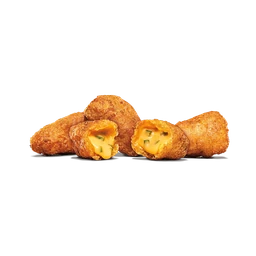 4 Pc. Jalapeño Cheddar BitesBurger King · Updated September 23, 2026
 4 Pc. Mozzarella FriesBurger King · Updated September 23, 2026
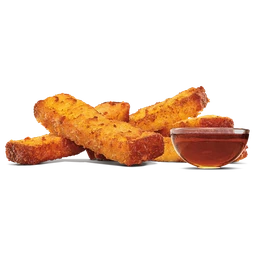 5 Pc. French Toast SticksBurger King · Updated September 23, 2026
 6 PC. Chicken NuggetsWendy's · Updated September 23, 2026
Research sources
The published research used in the PRūF app.
- Cottonseed oil UNII H3E878020N
FDA · Current record · Accessed 2026-09-05
- Standard for named vegetable oils, CXS210-1999
FAO/WHO Codex · 2026 edition with July corrigendum · Accessed 2026-09-05
- MON 88702 cotton consultation note
FDA · 2018-09-14 · Accessed 2026-09-05
- Food/feed assessment of cotton GHB811
EFSA · 2021 · Accessed 2026-09-05
- Cottonseed versus olive oil blood-lipid trial
Study authors · 2022 · Accessed 2026-09-05
- Inflammatory and coagulation markers after cottonseed versus olive oil
Study authors · Online 2023-08-22; 2024 issue · Accessed 2026-09-05
- Dose-response blood-lipid trial in adults at cardiovascular risk
Study authors · Online 2025-11-12; February 2026 issue · Accessed 2026-09-05
- Cottonseed and olive oil effects on the circulating lipidome
Study authors · 2025-09-08 · Accessed 2026-09-05
- Quality deterioration in five oils during crispy-meat frying
Study authors · 2026 · Accessed 2026-09-05
- MCPD esters and glycidyl esters in edible oils
FDA · Current page accessed 2026-09-05 · Accessed 2026-09-05
- Regulation 2026/1825 on process contaminants
European Commission · Adopted 2026-07-29; effective 2026-08-19 · Accessed 2026-09-05
- Louisiana R.S.40:662 seed-oil notice
Louisiana Legislature · Effective 2028-01-01 · Accessed 2026-09-05
Know your food.
Anywhere.
Explore restaurant ingredients and nutrition in the PRūF iPhone app.