
Calcium peroxide
Calcium peroxide is an oxidizing flour-treatment agent used to strengthen dough in some bakery products. It is also called INS 930. Its food use involves small amounts during processing; studies of concentrated powder or medical nanoparticles describe different types of exposure.
Also known as
calcium peroxide · calcium superoxide · calcium dioxide · peroxide, calcium · INS 930
Why PRūF tracks it
Long-term evidence for calcium peroxide used in bread is sparse, and neither irritation from concentrated powder nor effects of high-dose cattle feed establish harm from ordinary bakery exposure.
Read the research
Calcium peroxide helps change dough structure during breadmaking. US standards limit it together with certain other oxidizers to 75 parts per million of flour; Canada permits up to 100 parts per million in bread under its combination rules. These are amounts used in flour, not measurements of what remains in a finished loaf. Direct evidence about long-term human exposure from treated bread is sparse.
JECFA reported insufficient toxicology data in its historical assessment and did not set a treatment level. Newer cattle-feeding experiments found changes in feed intake, digestion or rumen microbes at much higher, percent-level dietary inclusion, with differing results across studies. Those animal diets and digestive systems cannot be treated as a model of ordinary bread consumption. Concentrated calcium peroxide can irritate tissue, but handling hazards also do not establish injury from bakery use.
China revoked its food-additive permission from May 2011, explicitly citing lack of technological necessity. That legal restriction remains relevant, but does not by itself demonstrate a health hazard. The review considers missing dietary evidence and uncertainty about exposure, without claiming either proven harm or complete safety.
Research reviewed on September 5, 2026 · 10 sources
Matches
1–12 of 164 matches
 12 oz. Ft. Worth Ribeye & Grilled ShrimpTexas Roadhouse · Updated September 23, 2026
 12 oz. Strip & Grilled Shrimp (in selected stores only)Texas Roadhouse · Updated September 23, 2026
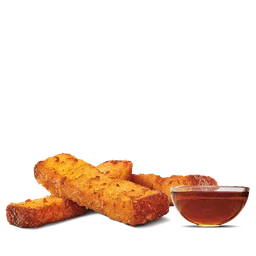 3 Pc. French Toast SticksBurger King · Updated September 23, 2026
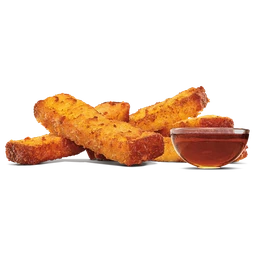 5 Pc. French Toast SticksBurger King · Updated September 23, 2026
 6 oz. Sirloin & Grilled ShrimpTexas Roadhouse · Updated September 23, 2026
 8 oz. Sirloin & Grilled ShrimpTexas Roadhouse · Updated September 23, 2026
 8 oz. Strip & Grilled Shrimp (in selected stores only)Texas Roadhouse · Updated September 23, 2026
 All-American DogSonic · Updated September 23, 2026
 All-Beef Hot DogTexas Roadhouse · Updated September 23, 2026
 Asiago Ranch Club Sandwich, ClassicWendy's · Updated September 23, 2026
 Asiago Ranch Club Sandwich, SpicyWendy's · Updated September 23, 2026
 Bacon & Cheese Whataburger®Whataburger · Updated September 23, 2026
Research sources
The published research used in the PRūF app.
- Substances Added to Food: Calcium peroxide
FDA · 2026-07-28 page update · Accessed 2026-09-05
- 21 CFR136.110 bread, rolls and buns
FDA/eCFR · Current checked2026-09-05 · Accessed 2026-09-05
- Permitted flour-treatment agents
Health Canada · 2024-12-18 list; current checked · Accessed 2026-09-05
- Calcium peroxide toxicological evaluation
FAO/WHO JECFA · 1965 evaluation;1967 monograph compilation · Accessed 2026-09-05
- Calcium peroxide, chemical111
FAO/WHO JECFA · 1965 evaluation; current database checked · Accessed 2026-09-05
- Calcium peroxide chemical hazards
NOAA/USCG CAMEO · Current page; underlying USCG1999 and older handbook data · Accessed 2026-09-05
- Seven-agency announcement2011No4 revoking calcium/benzoyl peroxide food uses
China Ministries of Health/Commerce and five agencies · 2011-02-11 issued; March2011 posted · Accessed 2026-09-05
- Calcium peroxide feeding and dairy-cow performance/microbiota
Vattulainen and colleagues · 2025-10-01 online;December issue · Accessed 2026-09-05
- Calcium peroxide supplementation in finishing beef cattle
Roskam and colleagues · 2024-09-19 online · Accessed 2026-09-05
- Calcium peroxide detection in flour using methanobactin
Primary study authors · 2022-01-04 online · Accessed 2026-09-05
Know your food.
Anywhere.
Explore restaurant ingredients and nutrition in the PRūF iPhone app.