
Monosodium glutamate
Monosodium glutamate, or MSG, is a salt of glutamic acid that adds savory taste to food. Cooks use it in soups, sauces, snacks and meals. It is made by fermentation and supplies the same glutamate found naturally in many foods.
Also known as
monosodium glutamate · monosodium L-glutamate · monosodium L-glutamate monohydrate · sodium glutamate · sodium L-glutamate · L-glutamic acid, monosodium salt · glutamic acid, monosodium salt · MSG · E621 · E 621 · INS 621
Why PRūF tracks it
The review considers inconsistent symptoms after large doses without food, uncertain long-term cardiovascular evidence and EFSA exposure concerns, while a new cohort association does not establish that MSG in ordinary meals causes heart disease.
Read the research
MSG is a specific flavor enhancer. Yeast extract, protein hydrolysates and naturally occurring glutamate are different ingredient identities, even though they can supply the same glutamate molecule. Most ingested glutamate is handled by the gut before reaching the wider circulation. FDA recognizes MSG as safe for its intended use; JECFA assigned glutamates a daily intake “not specified.”
EFSA instead set a group acceptable daily intake of 30 mg glutamic acid per kilogram of body weight and identified potential exceedances, especially in younger and high-consuming groups. Exceeding this protective value does not demonstrate injury. Some people report brief symptoms after several grams without food, but repeated blinded challenges have produced inconsistent responses. Long-term evidence is less settled: Chinese weight studies disagree, and a 2026 French cohort linked higher added MSG intake with ischemic heart disease, while its overall cardiovascular result was not statistically significant and cerebrovascular disease was not associated.
This single observational study cannot establish causation. New animal lung and developmental findings also need interpretation by dose and route. Added MSG must be named on U.S. packaged-food labels; Maine and Guam require additional disclosures in specified settings.
Research reviewed on September 5, 2026 · 12 sources
Matches
25–36 of 226 matches
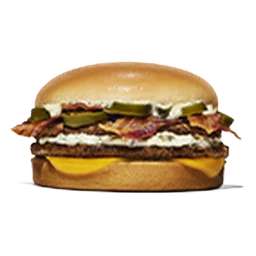 Bacon Blaze Jalapeño DoubleWhataburger · All-Time Favorites & Limited Time Offers · Updated August 2, 2026
 Baked Potato Soup - Bowl (in selected stores only)Texas Roadhouse · Updated September 23, 2026
 Baked Potato Soup - Cup (in selected stores only)Texas Roadhouse · Updated September 23, 2026
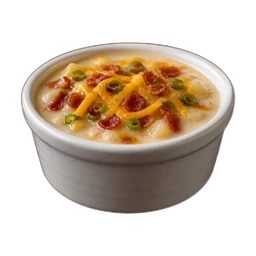 Baked Potato Soup Side - Cup (in selected stores only)Texas Roadhouse · Updated September 23, 2026
 Beef Tips with Mashed PotatoesTexas Roadhouse · Updated September 23, 2026
 Beef Tips with Seasoned RiceTexas Roadhouse · Updated September 23, 2026
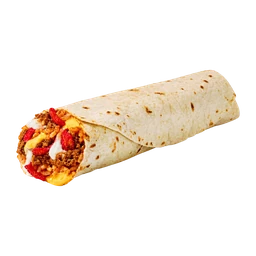 Beefy Crunch BurritoTaco Bell · Updated September 23, 2026
 Biscuit and GravyWhataburger · Updated September 23, 2026
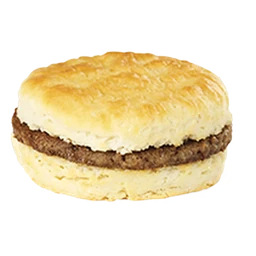 Biscuit with SausageWhataburger · Updated September 23, 2026
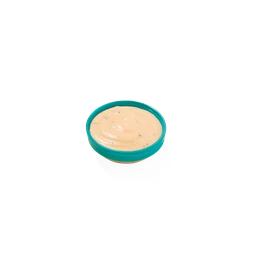 Blackened Ranch SaucePopeyes · Updated September 23, 2026
 Bone-In Pork ChopTexas Roadhouse · Updated September 23, 2026
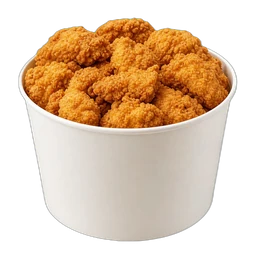 Boneless BucketKFC · Limited Time Offers · Updated September 6, 2026
Research sources
The published research used in the PRūF app.
- Questions and Answers on Monosodium glutamate (MSG)
FDA · 2012-11-19 · Accessed 2026-09-05
- Monosodium L-glutamate: evaluation database entry
WHO / JECFA · 1987 evaluation · Accessed 2026-09-05
- Re-evaluation of glutamic acid (E 620), sodium glutamate (E 621), potassium glutamate (E 622), calcium glutamate (E 623), ammonium glutamate (E 624) and magnesium glutamate (E 625) as food additives
EFSA ANS Panel · 2017-07-12 · Accessed 2026-09-05
- Multicenter, double-blind, placebo-controlled, multiple-challenge evaluation of reported reactions to monosodium glutamate
Geha et al. / Journal of Allergy and Clinical Immunology · 2000-11 · Accessed 2026-09-05
- Food additive and naturally occurring glutamate and risk of cardiovascular diseases in the NutriNet-Santé prospective cohort
Hasenböhler et al. / American Journal of Clinical Nutrition · Online 2026-08-08; publisher history also lists 2026-08-07 · Accessed 2026-09-05
- Consumption of monosodium glutamate in relation to incidence of overweight in Chinese adults: China Health and Nutrition Survey (CHNS)
He et al. / American Journal of Clinical Nutrition · Online 2011-04-06; issue 2011-06 · Accessed 2026-09-05
- Monosodium glutamate is not associated with obesity or a greater prevalence of weight gain over 5 years: findings from the Jiangsu Nutrition Study of Chinese adults
Shi et al. / British Journal of Nutrition · 2010-04-07 · Accessed 2026-09-05
- Umami induces pulmonary epithelial senescence via L-glutamic acid-triggered minority MOMP
Zhang et al. / npj Science of Food · 2026-03-02 · Accessed 2026-09-05
- Regulation (EC) No 1333/2008: consolidated food-additive permissions
European Union · Consolidated2026-08-18 · Accessed 2026-09-05
- Title 22, section 2157(13): Monosodium glutamate, MSG
Maine Legislature · Current text extracted 2026-01-05; subsection amended 2019 · Accessed 2026-09-05
- 10 GCA section 23108: Disclosure of MSG Required
Guam Compiler of Laws · Codification marked 2022-11-29; added by P.L. 25-015 · Accessed 2026-09-05
- Working Group on Food Additives Re-evaluation and Follow-up: meeting minutes
EFSA FAF Panel · Relevant discussions 2024-12-05 and 2025-03-18; rolling file inspected 2026-09-05 · Accessed 2026-09-05
Know your food.
Anywhere.
Explore restaurant ingredients and nutrition in the PRūF iPhone app.