
Calcium stearoyl lactylate
Calcium stearoyl lactylate is a mixture of calcium salts made from fatty acids and lactic acid. It helps ingredients mix, strengthens dough and assists whipping in certain foods. Known as E482, it has food-specific permissions and limits rather than unrestricted use.
Also known as
calcium stearoyl lactylate · calcium stearoyl-2-lactylate · calcium stearoyl lactate · calcium stearoyl-2-lactate · CSL · E 482 · E482 · INS 482(i) · INS 482i · calcium di-2-stearoyl lactate
Why PRūF tracks it
Calcium stearoyl lactylate has exposure uncertainties and a limited new mouse intestinal and liver signal, balanced by older toxicology evidence, with insufficient direct human data to establish harm at ordinary food-use levels.
Read the research
Calcium stearoyl lactylate is used in some bakery products and other foods to improve texture. EFSA assessed it together with the related sodium salt and established a combined acceptable daily intake of 22 milligrams per kilogram of body weight. This guidance includes an uncertainty allowance; exceeding it is not the same as showing harm. Older exposure models suggested possible exceedances, particularly in children, while a Belgian analysis using measured food concentrations found much lower estimates.
A 2026 study in male mice reported liver, colon and microbial changes after daily dosing for twelve weeks, with clearer tissue and inflammatory effects at the higher doses. Each dose group occupied a single cage, making the microbial findings difficult to separate from cage effects. Changes in barrier-related genes also do not directly measure a leaking intestine. Older animal studies and metabolism experiments provide some reassurance, but much of the longer-term evidence concerns the sodium salt.
Direct human evidence for calcium stearoyl lactylate remains sparse. The review considers uncertainty about exposure and newer intestinal findings without treating every emulsifier study as evidence against this particular ingredient.
Research reviewed on September 5, 2026 · 12 sources
Matches
1–12 of 110 matches
 All-American DogSonic · Updated September 23, 2026
 Bacon & Cheese Whataburger®Whataburger · Updated September 23, 2026
 Bacon Blaze Jalapeño DoubleWhataburger · All-Time Favorites & Limited Time Offers · Updated August 2, 2026
 Bacon CheeseburgerBurger King · Updated September 23, 2026
 Bacon Double CheeseburgerBurger King · Updated September 23, 2026
 Bacon KingBurger King · Updated September 23, 2026
 BBQ Bacon Whopper Jr.Burger King · Updated September 23, 2026
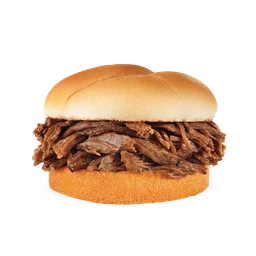 Beef Pot RoastCulver's · Updated September 23, 2026
 Black Angus ClubMcAlister's Deli · Updated September 26, 2026
 Black Angus Club (Choose 2 Portion)McAlister's Deli · Updated September 26, 2026
 Black Angus King ClubMcAlister's Deli · Updated September 26, 2026
 Black Angus King Club (Choose 2 Portion)McAlister's Deli · Updated September 26, 2026
Research sources
The published research used in the PRūF app.
- Calcium stearoyl-2-lactylate food conditions
FDA/eCFR · Current checked2026-09-05 · Accessed 2026-09-05
- Re-evaluation of E481/E482
EFSA ANS Panel · 2013-05-13 · Accessed 2026-09-05
- Calcium stearoyl-2-lactylate evaluation
FAO/WHO JECFA · 1973 evaluation;1996specificationrevision · Accessed 2026-09-05
- Consolidated EU additive permissions
European Union · 2026-08-18 consolidation · Accessed 2026-09-05
- Permitted flour treatment agents, C.3
Health Canada · 2024-12-18 · Accessed 2026-09-05
- Calcium stearyl lactylate and mouse hepatointestinal effects
Qiu and colleagues · 2026-05-23 · Accessed 2026-09-05
- Belgian dietary exposure to E481/E482
Bel and colleagues · 2018-02-22 · Accessed 2026-09-05
- One-year sodium stearoyl lactylate toxicity study
Lamb and colleagues · 2010-06-30 · Accessed 2026-09-05
- Other permitted uses, calcium stearoyl lactylate
Health Canada · 2026-02-04 · Accessed 2026-09-05
- Calcium-lactylate metabolism across species
Phillips,Topp and Gangolli · 1981 · Accessed 2026-09-05
- NutriNet emulsifiers and cancer
Sellem and colleagues · 2024-02 · Accessed 2026-09-05
- E482 specifications
European Union · 2025-10-27 consolidatedspecifications · Accessed 2026-09-05
Know your food.
Anywhere.
Explore restaurant ingredients and nutrition in the PRūF iPhone app.