
Yellow 5
Yellow 5 is a manufactured coloring added to foods and drinks. It can be used on its own or mixed with other colors to create different shades. Ingredient labels may list it as FD&C Yellow No. 5.
Also known as
Yellow 5
Why PRūF tracks it
PRūF tracks Yellow 5 because studies raise concerns about changes in attention and activity in some children. In one controlled study of Yellow 5, behavioral scores worsened as the dose increased, while other studies did not find a clear link between the amount given and those changes. This matters for parents and people limiting artificial colors, but the results vary between studies and children. The research does not show that Yellow 5 causes ADHD or that every child reacts.
This research covers a group of six dyes. Findings about one member do not establish the same effects for every dye.
Read the research
This page identifies Yellow 5. The following evidence describes the shared six-dye assessment, including findings that apply only to specified members. Synthetic dyes are a group, and findings for one dye do not establish equal effects from all others.
Controlled challenge studies support changes in activity or attention in some children, but results vary across doses, mixtures, observers and individuals. A review of 25 challenge studies found a behavioral signal in some trials; a later Hong Kong trial found no significant adverse effect. These studies do not show that dyes cause ADHD or that every child reacts. Laboratory studies also raise questions about particular dyes: Red 40 affected DNA and intestinal inflammation in mice, while other guideline tests were negative.
A 2026 study found that Sunset Yellow worsened experimentally induced egg-protein allergy in mice given 40 milligrams per kilogram of body weight; this is not evidence that ordinary food exposure causes human allergy. West Virginia restricts the six named dyes in school nutrition meals, and California has enacted school restrictions beginning December 31, 2027, with specified exceptions. Generic “artificial color” wording can include other pigments, so the named ingredient matters.
Research reviewed on September 5, 2026 · 12 sources
Matches
49–60 of 159 matches
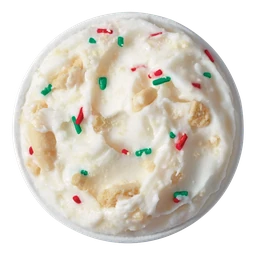 Frosted Sugar Cookie Blizzard ® Treat - MediumDairy Queen · Updated September 23, 2026
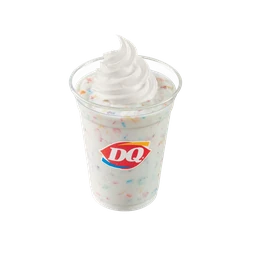 Fruity Pebbles ™ Shake - MediumDairy Queen · Updated September 23, 2026
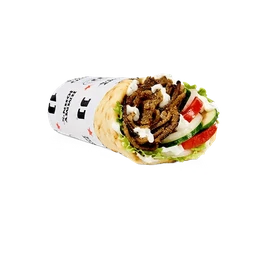 Greek GyroJimmy John's · Updated September 23, 2026
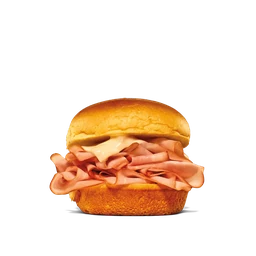 Ham SliderArby's · Updated September 23, 2026
 HamburgerJack in the Box · Updated September 23, 2026
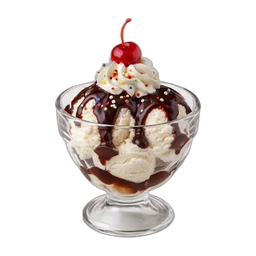 Ice Cream SundaeIHOP · Updated September 23, 2026
 Italian - LargeFirehouse Subs · Updated September 23, 2026
 Italian - MediumFirehouse Subs · Updated September 23, 2026
 Italian - SmallFirehouse Subs · Updated September 23, 2026
 Jalapeño & Cheese Whataburger®Whataburger · Updated September 23, 2026
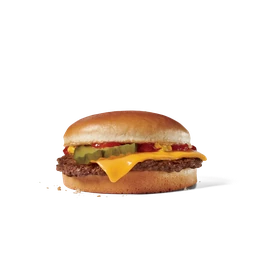 Jr. CheeseburgerJack in the Box · Updated September 23, 2026
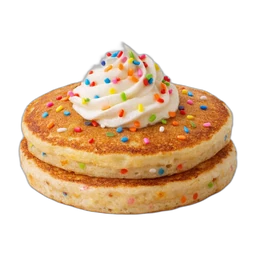 Jr. Cupcake PancakeIHOP · Updated September 23, 2026
Research sources
The published research used in the PRūF app.
- Color Additives Questions and Answers for Consumers
FDA · Accessed 2026-09-05
- 21 CFR 101.22 — Foods; labeling of spices, flavorings, colorings and chemical preservatives
FDA / eCFR · Current through 2026-09-03 · Accessed 2026-09-05
- Potential impacts of synthetic food dyes on activity and attention in children: a review of the human and animal evidence
Miller et al. / Environmental Health · 2022-04-29 · Accessed 2026-09-05
- Food additives and behavior in 8- to 9-year-old children in Hong Kong: a randomized, double-blind, placebo-controlled trial
Lok et al. / Journal of Developmental and Behavioral Pediatrics · 2013-11 · Accessed 2026-09-05
- The synthetic food dye, Red 40, causes DNA damage, causes colonic inflammation, and impacts the microbiome in mice
Zhang et al. / Toxicology Reports · 2023-09-06 · Accessed 2026-09-05
- Lack of genotoxicity in vivo for food color additive Allura Red AC
Bastaki et al. / Food and Chemical Toxicology · 2017-04-27 · Accessed 2026-09-05
- Short-Term Exposure to Tartrazine and Sunset Yellow Induces Hematological Alterations and DNA Damage in Rats
Hayat et al. / Journal of Applied Toxicology · 2026-05-12 · Accessed 2026-09-05
- Synthetic food pigment sunset yellow potentiates food allergy via immune dysregulation and intestinal barrier dysfunction
Wei et al. / npj Science of Food · 2026-05-30 · Accessed 2026-09-05
- AB 1264 — Pupil nutrition: restricted school foods and ultraprocessed foods of concern
California Legislature · 2025-10-08 · Accessed 2026-09-05
- West Virginia Code §18-5D-3A — Unsafe food additives prohibited
West Virginia Legislature · Accessed 2026-09-05
- Regulation (EC) No 1333/2008 — Annex V and Article 24
European Union / EUR-Lex · Consolidated 2026-08-18 · Accessed 2026-09-05
- FDA Takes Further Steps to Remove Outdated Authorizations for Color Additives in Food
FDA · 2026-07-22 · Accessed 2026-09-05
Know your food.
Anywhere.
Explore restaurant ingredients and nutrition in the PRūF iPhone app.