
Potassium iodate
Potassium iodate is an iodine salt used to strengthen bread dough and to supply iodine in fortified foods. It helps dough hold its shape and can improve texture. Its iodine contribution depends on the amount added and the food being made.
Also known as
potassium iodate · potassium iodate (KIO3) · iodic acid (HIO3), potassium salt · iodic acid, potassium salt · potassium iodine oxide (KIO3) · potassium iodine oxide · INS 917 · E917 · E 917
Why PRūF tracks it
Excess total iodine can disrupt thyroid function, particularly in susceptible people, and iodate-treated bread can contribute substantially; concentrated potassium iodate overdose can injure the retina, but that exposure does not establish harm from controlled food fortification.
Read the research
Potassium iodate has two food roles: supplying essential iodine and strengthening dough. Controlled fortification helps prevent iodine deficiency. In a small trial, a nutritional dose improved iodine status in mildly deficient adults without significant changes in thyroid-function blood tests. Dough treatment can add a substantial, variable iodine load.
USDA samples of iodate-containing breads averaged 296 micrograms of iodine per two white slices or 273 per two whole-wheat slices, totaling 50 grams; calcium iodate was also present in this sample category. These values are not the content of every loaf or a potassium-iodate-only estimate. Total daily upper levels are 200 micrograms for ages one to three, 300 for ages four to eight, and 1,100 for adults; exceeding a limit signals concern, not diagnosed harm. People with thyroid disease and developing babies can be more sensitive.
Severe eye injury has followed concentrated potassium iodate overdoses, a different exposure from fortification. JECFA recommends against flour treatment while recognizing iodate as an iodine source. US and Canadian rules permit limited bakery uses; EU and Great Britain distinguish additive use from authorized nutrient forms.
Research reviewed on September 5, 2026 · 12 sources
Matches
13–24 of 66 matches
 Chick-fil-A® Chicken SandwichChick-fil-A · Updated September 23, 2026
 Chick-fil-A® Deluxe SandwichChick-fil-A · Updated September 23, 2026
 Chicken Jr.Burger King · Updated September 23, 2026
 Classic French Dip & SwissArby's · Updated September 23, 2026
 Country Fried Pork Sandwich (Indiana) (in selected stores only)Texas Roadhouse · Updated September 23, 2026
 Country Fried Pork Sandwich (Iowa) (in selected stores only)Texas Roadhouse · Updated September 23, 2026
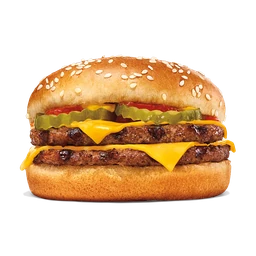 Double CheeseburgerBurger King · Updated September 23, 2026
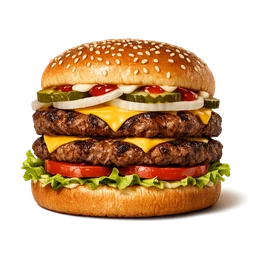 Double WhopperBurger King · Updated September 23, 2026
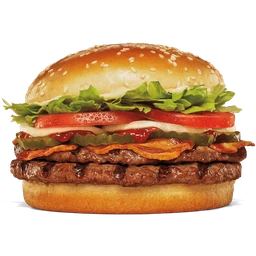 Double Whopper with BaconBurger King · Updated September 23, 2026
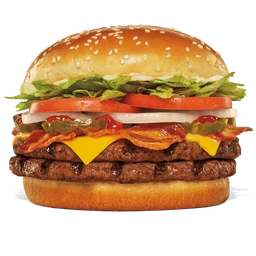 Double Whopper with Bacon & CheeseBurger King · Updated September 23, 2026
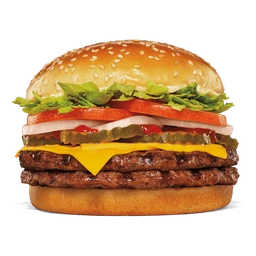 Double Whopper with CheeseBurger King · Updated September 23, 2026
 Grilled CheeseCulver's · Updated September 23, 2026
Research sources
The published research used in the PRūF app.
- 21 CFR 184.1635: Potassium iodate
FDA/eCFR · Current through 2026-09-03; original 1978 and amendment 1984 · Accessed 2026-09-05
- List of permitted flour treatment agents
Health Canada · 2024-12-18 list update · Accessed 2026-09-05
- Potassium iodate: chemical 2776
WHO/JECFA · 1965 evaluation and later 37th-meeting clarification; current database · Accessed 2026-09-05
- USDA, FDA and ODS-NIH database for iodine content of common foods: Release 4 documentation
USDA/FDA/NIH Office of Dietary Supplements · 2024-10 release · Accessed 2026-09-05
- Iodine: Fact Sheet for Health Professionals
NIH Office of Dietary Supplements · Current page inspected 2026-09-05 · Accessed 2026-09-05
- Potassium Iodate Retinotoxicity after an Overdose of Anti-Radiation Pills: A Case of Apocalyptic Retinopathy
Bernstein · 2025-03-01 journal publication; PMC available 2026-03-01 · Accessed 2026-09-05
- Regulation (EC) No 1333/2008 on food additives
European Union · Consolidated 2026-08-18 · Accessed 2026-09-05
- Regulation (EC) No 1925/2006 on addition of vitamins and minerals and certain other substances to foods
European Union · Consolidated 2025-11-26 · Accessed 2026-09-05
- Great Britain register on the addition of vitamins and minerals and of certain other substances to foods
UK Department of Health and Social Care · Current register inspected 2026-09-05 · Accessed 2026-09-05
- Adopted food ingredient labeling rules, 25 TAC 229.701–229.703
Texas Department of State Health Services/Secretary of State · 2026-02-20 publication; effective 2026-02-23 · Accessed 2026-09-05
- Louisiana Act 735 (2026), amending ingredient disclosure
Louisiana Legislature · 2026 enacted amendment; QR provision applies 2028-12-31 · Accessed 2026-09-05
- Iodine Supplementation of Mildly Iodine-Deficient Adults Lowers Thyroglobulin: A Randomized Controlled Trial
Ma and colleagues · 2016-02-19 online; April issue · Accessed 2026-09-05
Know your food.
Anywhere.
Explore restaurant ingredients and nutrition in the PRūF iPhone app.