
Diacetyl tartaric acid esters of mono- and diglycerides (DATEM)
DATEM is a mixture made from edible fats, glycerol and tartaric-acid derivatives. It helps oil and water mix and strengthens dough, supporting bread volume and texture. Food labels may call it DATEM or E472e; it is different from diacetyl flavoring.
Also known as
DATEM · diacetyltartaric and fatty acid esters of glycerol · mono- and diacetyl tartaric acid esters of mono- and diglycerides of fatty acids · E 472e · E472e · INS 472e · INS472e
Why PRūF tracks it
DATEM has emerging experimental gut and immune signals and a small observational diabetes association, but these do not establish clinical harm from ordinary food use, and older safety assessments provide important contrary evidence.
Read the research
DATEM helps strengthen bread dough and stabilize mixtures. Its composition varies with the fats and manufacturing process used. Older safety assessments found no established human-relevant genotoxic, cancer or reproductive effects in the available studies. EFSA derived an acceptable daily intake of 600 milligrams per kilogram of body weight, while JECFA uses 50, based on different assessments.
These values are not recommended intakes or measures of how much is in a particular food. EFSA’s 2025 exposure estimates stayed below its value, although some uses lacked data, and it recommended tighter impurity specifications. Newer findings warrant attention: a laboratory microbiota experiment found changes in bacterial density and gene activity, and an August 2026 study found barrier and inflammatory effects in cell models and mice. Human blood-cell experiments in that study were not a trial of people eating DATEM.
A French cohort reported a small diabetes association, which does not establish causation. DATEM-specific cancer findings were not significant. Current evidence leaves uncertainty about long-term gut effects and dietary relevance. US rules still permit specified uses; Texas’s conditional warning-label measure is not a food ban.
Research reviewed on September 5, 2026 · 12 sources
Matches
1–12 of 185 matches
 55+ French ToastIHOP · Updated September 23, 2026
 All-American DogSonic · Updated September 23, 2026
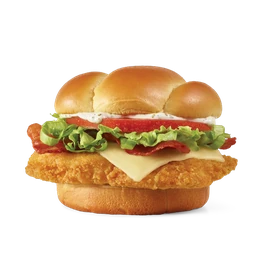 Asiago Ranch Club Sandwich, ClassicWendy's · Updated September 23, 2026
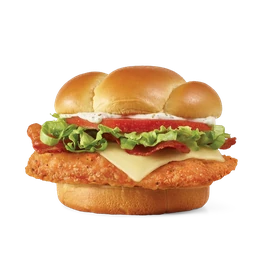 Asiago Ranch Club Sandwich, SpicyWendy's · Updated September 23, 2026
 Bacon & Cheese Whataburger®Whataburger · Updated September 23, 2026
 Bacon Blaze Jalapeño DoubleWhataburger · All-Time Favorites & Limited Time Offers · Updated August 2, 2026
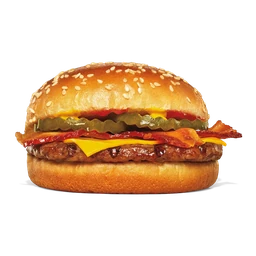 Bacon CheeseburgerBurger King · Updated September 23, 2026
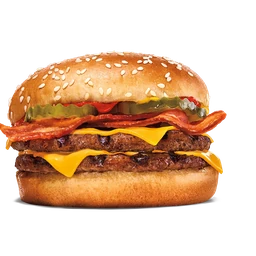 Bacon Double CheeseburgerBurger King · Updated September 23, 2026
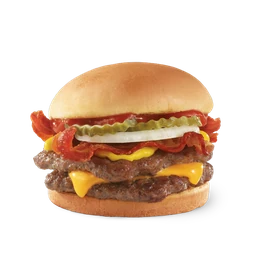 Bacon Double Stack™Wendy's · Updated September 23, 2026
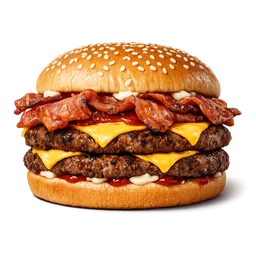 Bacon KingBurger King · Updated September 23, 2026
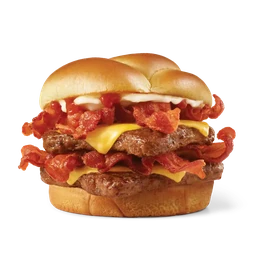 Baconator®Wendy's · Updated September 23, 2026
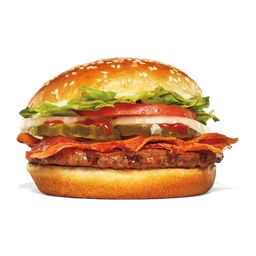 BBQ Bacon Whopper Jr.Burger King · Updated September 23, 2026
Research sources
The published research used in the PRūF app.
- 21 CFR 184.1101 DATEM
FDA/eCFR · Current September 2026 · Accessed 2026-09-05
- DATEM substance identity, UNII 248HN3Z28U
FDA · Current record · Accessed 2026-09-05
- Re-evaluation of E472a–f
EFSA · 2020-03-11 · Accessed 2026-09-05
- Specifications and exposure for E472a,b,d,e,f
EFSA · 2025-08-11 · Accessed 2026-09-05
- DATEM cardiac/adrenal reassessment and ADI
WHO/JECFA · 2003 meeting;2004 monograph · Accessed 2026-09-05
- Direct emulsifier effects on cultured human microbiota
Study authors · 2021-03-22 · Accessed 2026-09-05
- DATEM/soy lecithin epithelial and immune experiments
Study authors · 2026-08-08 · Accessed 2026-09-05
- Emulsifiers and incident type2 diabetes in NutriNet
Study authors · 2024 · Accessed 2026-09-05
- EU food additive specifications, E472e
European Union · Consolidated2026-08-18 · Accessed 2026-09-05
- Texas final food-warning-label rules
Texas DSHS · Published2026-02-20; effective2026-02-23 · Accessed 2026-09-05
- American Beverage Association v.Paxton preliminary injunction
US District Court, Western District of Texas · 2026-02-11 · Accessed 2026-09-05
- Emulsifiers and cancer, DATEM-specific null findings
Study authors · 2024-02-13 · Accessed 2026-09-05
Know your food.
Anywhere.
Explore restaurant ingredients and nutrition in the PRūF iPhone app.