
Sodium carboxymethylcellulose (cellulose gum)
Sodium carboxymethylcellulose is a modified form of cellulose used to thicken liquids, hold moisture and keep food ingredients evenly mixed. Often called cellulose gum or E466, it helps maintain texture in foods such as sauces, desserts and drinks and differs from unmodified cellulose.
Also known as
sodium carboxymethylcellulose · sodium carboxymethyl cellulose · carboxymethyl cellulose, sodium salt · carboxymethylcellulose sodium · cellulose, carboxymethyl ether, sodium salt · sodium salt of carboxymethyl ether of cellulose · cellulose gum · sodium cellulose glycolate · CMC · sodium CMC · Na CMC · E466 · E 466 · INS 466
Why PRūF tracks it
Small human studies found gut changes without clear inflammation, while a cardiovascular association, mixed animal findings and rare allergic reactions leave the relevance to usual food intake unresolved.
Read the research
Cellulose gum has a long history of food use, but newer studies raise questions about its effects inside the gut. In a controlled study, seven adults received 15 grams daily for about eleven days and showed gut-community and metabolite changes plus modest post-meal discomfort, without detected overt inflammation. A later trial tested 2.75 grams daily for four weeks in a small group within a six-arm study. It reported lower short-chain fatty acids but no inflammatory, permeability or metabolic harm; the full report was unavailable for detailed checking.
A large French cohort associated estimated intake with small increases in cardiovascular and coronary disease that survived statistical checks. Estimated exposure, possible confounding and absent independent replication limit causal interpretation. Mouse studies report inflammatory, metabolic and offspring effects, although other experiments did not reproduce inflammation and a recent unreviewed study found benefit in a different colitis model. Rare food-associated allergic reactions are documented, without establishing their frequency.
Traditional assessments found no general-population concern at reported uses, but that does not resolve every newer gut finding. The EU will remove specified infant and young-child medical-food permissions in April 2027 because adequate safety data were missing. General-food uses remain permitted. The review considers credible signals whose clinical meaning and relevance to usual intake remain uncertain.
Research reviewed on September 5, 2026 · 12 sources
Matches
541–552 of 579 matches
 Toasted Marshmallow Mocha DQ ® Coffee Cooler - MediumDairy Queen · Updated September 23, 2026
 Tostada Salad - Carnitas & Black BeansBaja Fresh · Updated September 23, 2026
 Tostada Salad - Carnitas & Pinto BeansBaja Fresh · Updated September 23, 2026
 Tostada Salad - Chicken & Black BeansBaja Fresh · Updated September 23, 2026
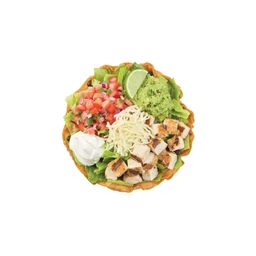 Tostada Salad - Chicken & Pinto BeansBaja Fresh · Updated September 23, 2026
 Tostada Salad - Impossible & Black BeansBaja Fresh · Updated September 23, 2026
 Tostada Salad - Impossible & Pinto BeansBaja Fresh · Updated September 23, 2026
 Tostada Salad - Roasted Veggies & Black BeansBaja Fresh · Updated September 23, 2026
 Tostada Salad - Roasted Veggies & Pinto BeansBaja Fresh · Updated September 23, 2026
 Tostada Salad - Shrimp & Black BeansBaja Fresh · Updated September 23, 2026
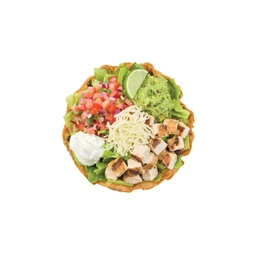 Tostada Salad - Shrimp & Pinto BeansBaja Fresh · Updated September 23, 2026
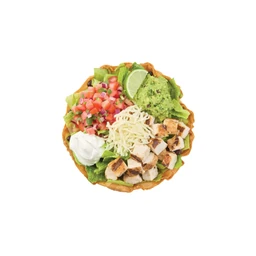 Tostada Salad - Steak & Black BeansBaja Fresh · Updated September 23, 2026
Research sources
The published research used in the PRūF app.
- 21 CFR182.1745 Sodium carboxymethylcellulose
FDA/eCFR · Current through2026-09-03 · Accessed 2026-09-05
- Sodium carboxymethyl cellulose evaluation
FAO/WHO JECFA · 1989 evaluation · Accessed 2026-09-05
- Re-evaluation of celluloses as food additives
EFSA · 2018-01-16 · Accessed 2026-09-05
- Sodium carboxymethyl cellulose infant-use and general-population follow-up
EFSA · 2022-12-09 · Accessed 2026-09-05
- Regulation2025/666: E466 uses and cellulose specifications
European Union · Published2025-04-07 · Accessed 2026-09-05
- Permitted emulsifying, gelling, stabilizing or thickening agents
Health Canada · Current2026-09-05; base list published2025-10-20 · Accessed 2026-09-05
- Randomized controlled-feeding study of dietary carboxymethylcellulose
Chassaing et al. · Online2021-11; issue2022-03 · Accessed 2026-09-05
- Effect of five dietary emulsifiers on inflammation, permeability, and the gut microbiome
Wellens et al. · Online2025-08-13; issue2026-04 · Accessed 2026-09-05
- Food additive emulsifiers and cardiovascular disease in NutriNet-Sante
Sellem et al. · 2023-09-06 · Accessed 2026-09-05
- Maternal emulsifier consumption and offspring disease susceptibility
Study authors · 2025-07-29 · Accessed 2026-09-05
- Anaphylaxis to carboxymethylcellulose: add food additives to the list of elicitors
Ohnishi et al. · 2019-02-14 · Accessed 2026-09-05
- Carboxymethylcellulose ameliorates high-fat-diet-associated colitis through bile-acid and macrophage pathways
Study authors · 2026-08-27 preprint · Accessed 2026-09-05
Know your food.
Anywhere.
Explore restaurant ingredients and nutrition in the PRūF iPhone app.