
Avocado Oil
Avocado oil is made from avocado fruit, often its flesh, and used in cooking and dressings. Refined and virgin forms differ in processing, flavor and minor compounds. Both usually supply mainly unsaturated fats, including a substantial share of monounsaturated fat.
Also known as
avocado oil · Persea americana fruit oil
Why PRūF tracks it
For identified food-grade avocado oil, oil quality, processing contaminants and prolonged heating matter, and direct long-term human evidence remains limited.
Read the research
Avocado oil usually contains more unsaturated than saturated fat, but its composition varies with the fruit and processing. Replacing a saturated-fat-rich food with an unsaturated oil can fit dietary guidance; adding oil without replacing another energy source is a different question. Evidence specific to avocado oil in people remains sparse. A small meal study found favorable short-term biomarkers when avocado oil replaced butter, while a small trial in adults with metabolic syndrome did not show improved insulin resistance or oxidative stress.
These findings do not establish prevention of heart attacks, diabetes or other long-term illness. Whole-avocado studies also include the fruit’s fiber and cannot be assumed to show the same effects for its oil. Prolonged heating changes avocado oil, as it does other cooking oils, and the amount of deterioration depends on temperature, time and the particular oil. Product surveys raise concerns about authenticity and quality, but they do not show that every avocado oil is adulterated or that a particular meal contains harmful levels of degradation products.
Research reviewed on September 5, 2026 · 12 sources
Matches
1–12 of 21 matches
 Buffalo ChickenSweetgreen · Updated September 23, 2026
 Cali Chicken ClubSweetgreen · Updated September 23, 2026
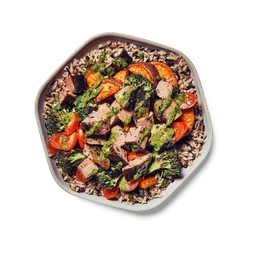 Caramelized Garlic SteakSweetgreen · Updated September 23, 2026
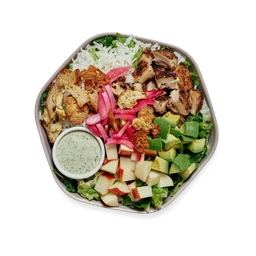 Chicken Avocado RanchSweetgreen · Updated September 23, 2026
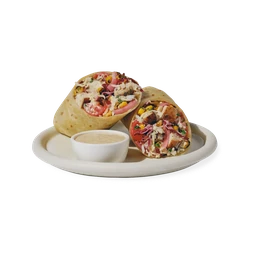 Chicken Jalapeño RanchSweetgreen · Updated September 23, 2026
 Chicken Pesto ParmSweetgreen · Updated September 23, 2026
 Chicken Sesame CrunchSweetgreen · Updated September 23, 2026
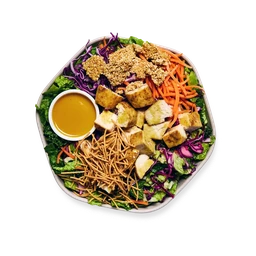 Chicken Sesame Crunch SaladSweetgreen · Updated September 23, 2026
 Classic Chicken CaesarSweetgreen · Updated September 23, 2026
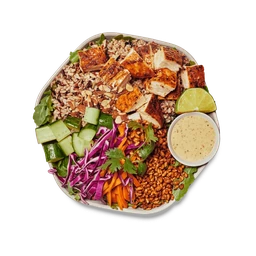 Crispy Rice BowlSweetgreen · Updated September 23, 2026
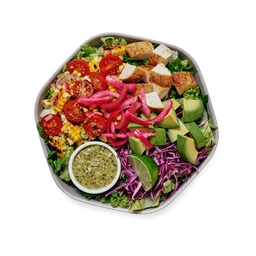 Guacamole GreensSweetgreen · Updated September 23, 2026
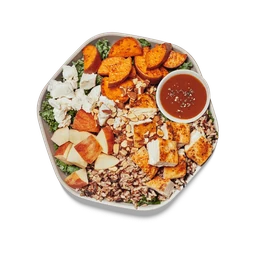 Harvest BowlSweetgreen · Updated September 23, 2026
Research sources
The published research used in the PRūF app.
- Standard for Named Vegetable Oils, CXS 210-1999
FAO / WHO Codex · 2024 inclusion; current served text inspected · Accessed 2026-09-05
- Saturated fatty acid and trans-fatty acid intake for adults and children
WHO · 2023-07-17 · Accessed 2026-09-05
- Inclusion of Hass avocado-oil improves postprandial metabolic responses to a hypercaloric-hyperlipidic meal in overweight subjects
Furlan et al. / Journal of Functional Foods · 2017 · Accessed 2026-09-05
- Effects of the Avocado Oil Supplementation on Oxidative and Insulin Resistance Parameters in a Double-Blind and Randomized Clinical Trial in Metabolic Syndrome Patients
Ramos et al. / Journal of Clinical Nutrition & Dietetics · 2023-08-14 · Accessed 2026-09-05
- Effects of avocado oil supplementation on lipid profile and atherogenic indices in a double-blind and randomised intervention in patients with metabolic syndrome
Azevedo et al. / Demetra · 2023-02 · Accessed 2026-09-05
- Stability of avocado oil during heating: comparative study to olive oil
Berasategi et al. / Food Chemistry · 2012 issue; online 2011-11-12 · Accessed 2026-09-05
- Performance of virgin and refined avocado oils during deep-frying and thermoxidation simulating frying in comparison with olive and sunflower oils
Holgado et al. / Grasas y Aceites · 2024-10-03 online; issue April–June 2024 · Accessed 2026-09-05
- Using 3-monochloropropanediol esters and glycidyl esters to discriminate adulteration of cold-pressed avocado oils and their refined variants
Wu et al. / European Journal of Lipid Science and Technology · 2024-06-20 · Accessed 2026-09-05
- Process contaminants
EFSA · Accessed 2026-09-05
- EU 2026/1825 contaminant limits amendment
European Union · Adopted 2026-07-29; published 2026-07-30 · Accessed 2026-09-05
- Authenticity of avocado and olive oils used as ingredients in commercially processed foods
Lopez-Alvarez et al. / Applied Food Research · 2026 online; December 2026 issue · Accessed 2026-09-05
- Cis-Vaccenic Acid as a Compositional Marker for Detecting High-Oleic Seed Oil Adulteration in Avocado Oil
Wannasin and Wang / JAOCS · 2026-06-29 · Accessed 2026-09-05
Know your food.
Anywhere.
Explore restaurant ingredients and nutrition in the PRūF iPhone app.