
Aspartame
Aspartame is a sweetener used in diet drinks, gum and other foods. It is about 200 times sweeter than sugar, so only small amounts are needed. Digestion breaks it into two amino acids, including phenylalanine, and a small amount of methanol.
Also known as
aspartame · E 951 · INS 951 · aspartyl phenylalanine methyl ester · L-aspartyl-L-phenylalanine methyl ester
Why PRūF tracks it
Aspartame requires avoidance or restriction for people with PKU, while limited cancer associations and experimental findings leave uncertainty about long-term effects without establishing that ordinary dietary exposure causes those harms.
Read the research
Aspartame provides sweetness with little energy because only small amounts are needed. Its phenylalanine content is important for people with phenylketonuria, or PKU, who should avoid or restrict it as part of their prescribed diet. Cancer evidence remains unsettled. IARC classified aspartame as possibly carcinogenic based on limited evidence, especially for liver cancer; this describes a possible hazard and does not show the risk from a serving.
JECFA retained a daily intake benchmark of 40 milligrams per kilogram of body weight, while FDA uses 50. A newer US cohort reported higher cancer incidence among consumers without a clear dose–response pattern, while a separate long-running study found no overall breast-cancer association. These observational findings cannot establish causation. Recent animal and cell studies raise questions about inflammation, gut-barrier function and cardiovascular effects, but exposure and model limitations prevent direct translation to ordinary food consumption.
Human glucose and insulin trials have generally been reassuring for the measured outcomes, although long-term evidence remains limited. Rhode Island excludes artificial sweeteners from specified school foods under nutrition standards, and Louisiana has enacted a future school-food restriction.
Research reviewed on September 5, 2026 · 12 sources
Matches
1–12 of 20 matches
 12 oz. Ft. Worth Ribeye & Grilled ShrimpTexas Roadhouse · Updated September 23, 2026
 12 oz. Strip & Grilled Shrimp (in selected stores only)Texas Roadhouse · Updated September 23, 2026
 6 oz. Sirloin & Grilled ShrimpTexas Roadhouse · Updated September 23, 2026
 8 oz. Sirloin & Grilled ShrimpTexas Roadhouse · Updated September 23, 2026
 8 oz. Strip & Grilled Shrimp (in selected stores only)Texas Roadhouse · Updated September 23, 2026
 Dallas Filet & Grilled ShrimpTexas Roadhouse · Updated September 23, 2026
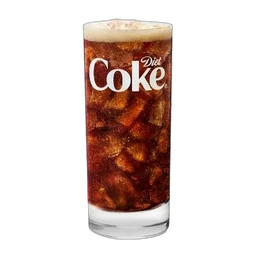 Diet Coke®McDonald's · Updated September 22, 2026
 Fresh-Baked BreadTexas Roadhouse · Updated September 23, 2026
 Grilled ShrimpTexas Roadhouse · Updated September 23, 2026
 Mini-CheeseburgersTexas Roadhouse · Updated September 23, 2026
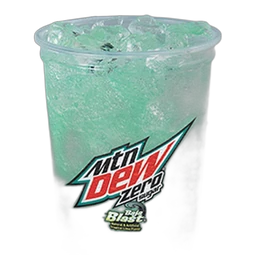 Mtn Dew® Baja Blast Zero Sugar (16 fl oz)Taco Bell · Updated September 23, 2026
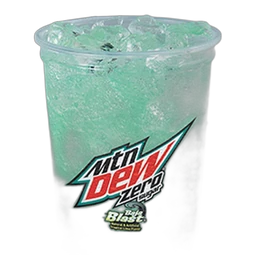 Mtn Dew® Baja Blast Zero Sugar (20 fl oz)Taco Bell · Updated September 23, 2026
Research sources
The published research used in the PRūF app.
- Aspartame and Other Sweeteners in Food
FDA · Accessed 2026-09-05
- Aspartame hazard and risk assessment results released
WHO / IARC / JECFA · 2023-07-14 · Accessed 2026-09-05
- Aspartame
EFSA · 2026-02-06 · Accessed 2026-09-05
- Association between Aspartame Consumption and Cancer Risk: Evidence from a Large Prospective Cohort
American Cancer Society researchers / Journal of Nutrition · 2026-02-28 · Accessed 2026-09-05
- Consumption of aspartame and risk of breast cancer in the Nurses’ Health Studies
Romanos-Nanclares et al. / JNCI · 2025-04 (issue) · Accessed 2026-09-05
- Artificial sweeteners and cancer risk: Results from the NutriNet-Santé population-based cohort study
Debras et al. / PLOS Medicine · 2022-03-24 · Accessed 2026-09-05
- The Effects of Aspartame on Glucose, Insulin, and Appetite-Regulating Hormone Responses in Humans: Systematic Review and Meta-Analyses
Boxall et al. / Advances in Nutrition · 2025-05-15 · Accessed 2026-09-05
- Cellular Stress, Inflammation and Barrier Damage in Gut Epithelial Cells Caused by Aspartame
Pat et al. / Allergy · 2025-10-24 · Accessed 2026-09-05
- Sweetener aspartame aggravates atherosclerosis through insulin-triggered inflammation
Wu et al. / Cell Metabolism · 2025-02-19 · Accessed 2026-09-05
- R.S. 17:197.2 — Prohibited ingredients; local production preference
Louisiana Legislature · Accessed 2026-09-05
- Act 735 / SB 57 — Amendments to Act 463
Louisiana Legislature · 2026-06-01 · Accessed 2026-09-05
- 200-RICR-20-25-4: Nutrition Requirements for School Reimbursable Meals and Competitive Foods and Beverages
Rhode Island Department of Education · 2022-01-04 periodic refile · Accessed 2026-09-05
Know your food.
Anywhere.
Explore restaurant ingredients and nutrition in the PRūF iPhone app.