
Propyl paraben
Propyl paraben is a preservative used to slow the growth of molds, yeasts and some bacteria in food. It helps products keep longer during storage. Labels may call it propylparaben or propyl p-hydroxybenzoate; it is distinct from other paraben preservatives.
Also known as
propyl paraben · propylparaben · propyl p-hydroxybenzoate · propyl 4-hydroxybenzoate · benzoic acid, 4-hydroxy-, propyl ester · benzoic acid, p-hydroxy-, propyl ester · n-propyl ester of p-hydroxybenzoic acid · n-propyl ester of 4-hydroxybenzoic acid · propyl p-oxybenzoate · propyl para-hydroxybenzoate · E 216 · INS 216
Why PRūF tracks it
Reproductive and hormone findings conflict, with substantial uncertainty about ordinary dietary exposure; reassuring guideline animal studies and recent human clinical findings limit confidence that food intake harms fertility.
Read the research
Propyl paraben helps preserve food by limiting microbial growth. Its main health question concerns hormone activity and reproduction, rather than an established human cancer risk. Results conflict: guideline oral rat studies found no reproductive harm at high tested doses, while other experiments raise ovarian and developmental concerns. A 2025 mouse study reported effects across generations after injections during pregnancy; injections differ from eating a preservative, and its human comparison did not measure paraben exposure.
A separate oral mouse study during pregnancy and nursing found persistent mammary changes, including some low-dose proliferation findings, but did not measure tumors and found no differences in litter size or pup survival. Human studies measure exposure from multiple sources, including personal care products, so their findings cannot isolate food intake. A 2025 fertility study found a thinner uterine lining at higher measured exposure but no association with pregnancy or live birth; another pregnancy study found no overall gestational diabetes association. These findings support continued concern without proving that a normal serving harms fertility.
US rules permit limited food use while FDA reassesses it. The EU withdrew food authorization; California and Arkansas have enacted broader bans starting in 2027 and 2028.
Research reviewed on September 5, 2026 · 12 sources
Matches
1–10 of 10 matches
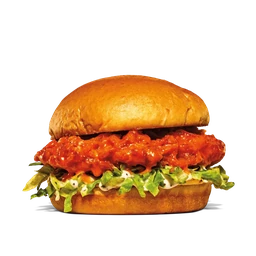 Buffalo Chicken SandwichArby's · Updated September 23, 2026
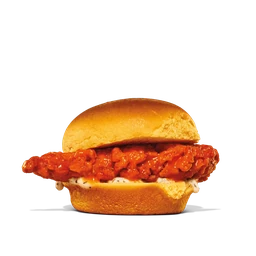 Buffalo Chicken SliderArby's · Updated September 23, 2026
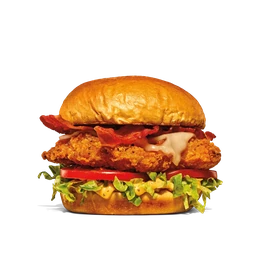 Chicken Bacon Swiss SandwichArby's · Updated September 23, 2026
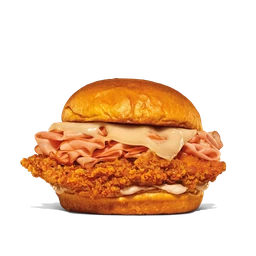 Chicken Cordon BleuArby's · Updated September 23, 2026
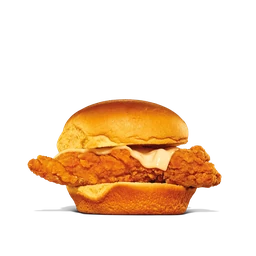 Chicken SliderArby's · Updated September 23, 2026
 Crispy Chicken SandwichSonic · Updated September 23, 2026
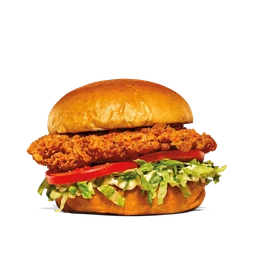 Crispy Chicken SandwichArby's · Updated September 23, 2026
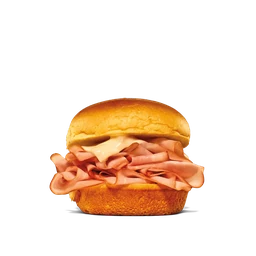 Ham SliderArby's · Updated September 23, 2026
 KFC® Cornbread MuffinKFC · Updated October 2, 2026
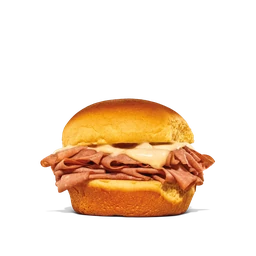 Roast Beef SliderArby's · Updated September 23, 2026
Research sources
The published research used in the PRūF app.
- 21 CFR 184.1670: Propylparaben
FDA/eCFR · Current through 2026-09-02 · Accessed 2026-09-05
- List of Select Chemicals in the Food Supply Under FDA Review
FDA · Table as of 2026-05-12; page updated 2026-07-29 · Accessed 2026-09-05
- Directive 2006/52/EC
European Parliament and Council · 2006-07-05; noncompliant trade/use deadline 2008-08-15 · Accessed 2026-09-05
- AB418: The California Food Safety Act
California Legislature · Approved 2023-10-07 · Accessed 2026-09-05
- Act622 of 2025
Arkansas General Assembly · Approved 2025-04-16 · Accessed 2026-09-05
- Propyl p-hydroxybenzoate: Chemical330
WHO/JECFA · 2006 evaluation; current database · Accessed 2026-09-05
- Application of grouping and read-across for the evaluation of parabens of different chain lengths with a particular focus on endocrine properties
Fayyaz, Kreiling and Sauer · 2021 · Accessed 2026-09-05
- Opinion on Propylparaben, SCCS/1623/20
European Commission Scientific Committee on Consumer Safety · Final 2021-03-30/31 · Accessed 2026-09-05
- Transgenerational inheritance of diminished ovarian reserve triggered by prenatal propylparaben exposure in mice
Li and colleagues · 2025-09-16 · Accessed 2026-09-05
- Phenol biomarker concentrations in human ovarian follicular fluid and the associations with in-vitro fertilization outcomes
Dimitriadis and colleagues · 2025 · Accessed 2026-09-05
- Urinary concentrations of early and mid-pregnancy parabens and gestational diabetes: A nested case-control study within the PETALS cohort
PETALS investigators · 2025 · Accessed 2026-09-05
- Exposure to Propylparaben During Pregnancy and Lactation Induces Long-Term Alterations to the Mammary Gland in Mice
Mogus and colleagues · 2021-03-15 online; corrected and typeset 2021-05-14; June issue · Accessed 2026-09-05
Know your food.
Anywhere.
Explore restaurant ingredients and nutrition in the PRūF iPhone app.