
Beef tallow
Beef tallow is fat rendered from cattle tissues and used for frying, roasting and baking. It contains a mix of saturated and unsaturated fats, with the proportions varying by source and processing. Refined tallow and separated liquid fractions can differ in composition.
Also known as
beef tallow · rendered beef fat · edible beef tallow
Why PRūF tracks it
Beef tallow raises a nutritional concern because replacing unsaturated oils with substantial amounts can increase LDL cholesterol, while the health significance depends on intake, the replacement food and overall cardiovascular risk.
Read the research
Beef tallow contains substantial saturated fat, alongside monounsaturated fat. The main dietary question is what it replaces and how much is eaten. Controlled feeding studies found higher LDL cholesterol with tallow-rich diets than with several unsaturated oils, although the studies were small and measured biomarkers rather than heart attacks. Different saturated fatty acids also have different effects: tallow is a mixture, so findings for stearic acid alone cannot describe the whole fat.
Broader trials of saturated-fat reduction suggest that benefits depend on the replacement nutrient and baseline cardiovascular risk; estimates for several long-term outcomes remain uncertain. Current US dietary guidance lists tallow as a cooking option while retaining a general saturated-fat limit, and WHO and the American Heart Association favor replacing saturated-fat sources with unsaturated fats. Tallow can resist some chemical changes during frying, but prolonged heating still alters it, and laboratory stability does not demonstrate better long-term health. Results from animal disease models, whether favorable or unfavorable, do not establish what an ordinary tallow-containing meal will do in people.
Research reviewed on September 5, 2026 · 12 sources
Matches
1–6 of 6 matches
 Colorado OmeletteIHOP · Updated September 23, 2026
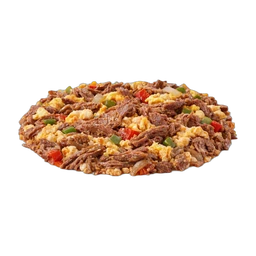 MachacaIHOP · Updated September 23, 2026
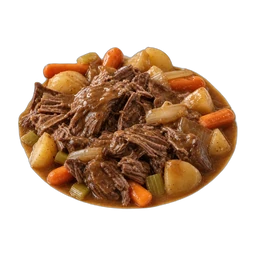 Pot RoastIHOP · Updated September 23, 2026
 Spicy Poblano BenedictIHOP · Updated September 23, 2026
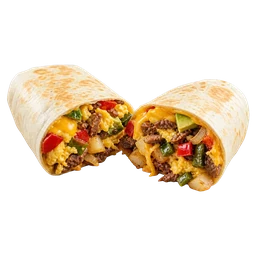 Spicy Poblano Fajita BurritoIHOP · Updated September 23, 2026
 Spicy Poblano OmeletteIHOP · Updated September 23, 2026
Research sources
The published research used in the PRūF app.
- Standard for Named Animal Fats, CXS 211-1999
FAO / WHO Codex · 2024 amendment; redesigned2026 · Accessed 2026-09-05
- Saturated fatty acid and trans-fatty acid intake for adults and children
WHO · 2023-07-17 · Accessed 2026-09-05
- 2026 Dietary Guidance to Improve Cardiovascular Health: Top Things to Know
American Heart Association · 2026-03-31 · Accessed 2026-09-05
- Dietary Guidelines for Americans,2025–2030
USDA / HHS · 2026-01 · Accessed 2026-09-05
- Effects of fats high in stearic acid on lipid and lipoprotein concentrations in men
Denke and Grundy · 1991-12 · Accessed 2026-09-05
- Varying dietary fat type of reduced-fat diets has little effect on the susceptibility of LDL to oxidative modification in moderately hypercholesterolemic subjects
Schwab et al. · 1998-10 · Accessed 2026-09-05
- Effect of Interventions Aimed at Reducing or Modifying Saturated Fat Intake on Cholesterol, Mortality, and Major Cardiovascular Events: A Risk Stratified Systematic Review of Randomized Trials
Steen et al. · Online2025-12; issue2026-02 · Accessed 2026-09-05
- Physicochemical analysis of beef tallow and its liquid fraction, comparing frying performance with high oleic acid rapeseed oil and rice bran oil
Lei et al. · 2025-02-21 online; June issue · Accessed 2026-09-05
- Frying characteristics of beef tallow as a potential alternative for intermittent deep-fat frying
Food Chemistry study authors · 2025-05-26 online · Accessed 2026-09-05
- Ameliorative effects of tallow and olive oil on hyperlipidemia-induced atherogenesis in male albino rats
AL-Subari et al. · 2026-01-06 · Accessed 2026-09-05
- The source of dietary fat influences anti-tumour immunity in obese mice
Nature Metabolism study authors · 2025-07-25 · Accessed 2026-09-05
- 21 CFR189.5: Prohibited cattle materials
US FDA / Government Publishing Office · 2025-04-01 official edition · Accessed 2026-09-05
Know your food.
Anywhere.
Explore restaurant ingredients and nutrition in the PRūF iPhone app.